English | 中文 | Español

Chemical Products

(1S,3S,5S)-2-Azabicyclo[3.1.0]hexane-3-carboxamide methanesulfonate

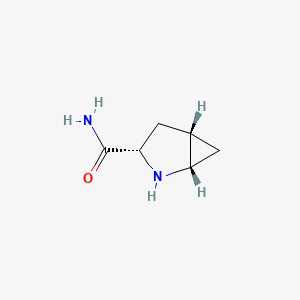
(1S,3S,5S)-2-Azabicyclo[3.1.0]hexane-3-carboxamide methanesulfonate, identified by CAS number 709031-45-8, is a specialized organic building block and a significant chiral intermediate in the field of medicinal chemistry and fine chemical synthesis. Structurally, it consists of a bicyclic 2-azabicyclo[3.1.0]hexane framework featuring a carboxamide functional group, stabilized as a methanesulfonate salt. This specific stereoisomer is characterized by its rigid bicyclic

(1S,3S,5S)-2-Azabicyclo[3.1.0]hexane-3-carboxamide methanesulfonate Read More »
Tetraethylammonium p-toluenesulfonate

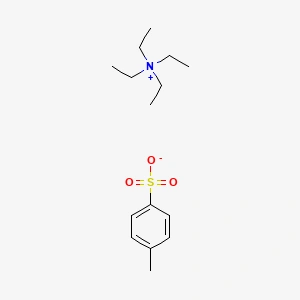
Tetraethylammonium p-toluenesulfonate, identified by CAS number 733-44-8, is a sophisticated quaternary ammonium salt frequently utilized as a high-purity chemical intermediate and reagent. Composed of a tetraethylammonium cation and a p-toluenesulfonate (tosylate) anion, this compound is typically recognized as a white to off-white crystalline powder. It exhibits excellent solubility in a variety of polar organic solvents

Tetraethylammonium p-toluenesulfonate Read More »

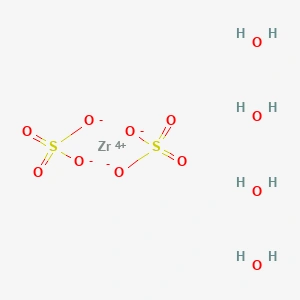
Zirconium sulfate tetrahydrate

Zirconium sulfate tetrahydrate, identified by CAS number 7446-31-3, is a significant inorganic compound widely utilized as a versatile chemical intermediate and industrial reagent. Characterized as a white, crystalline solid, this tetrahydrate form is highly soluble in water and dilute sulfuric acid, yielding strongly acidic solutions. Chemically, it serves as a robust source of zirconium ions,

Zirconium sulfate tetrahydrate Read More »

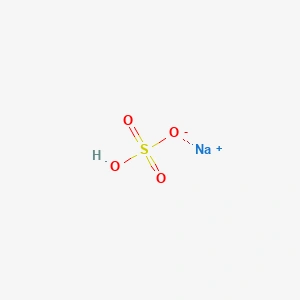
Sodium bisulfate

Sodium bisulfate, identified by CAS number 7681-38-1, is an inorganic compound formed by the partial neutralization of sulfuric acid with a sodium base. Commonly known as sodium hydrogen sulfate, it typically appears as white crystalline pellets or granules. As a dry acid, it offers a safer, more manageable alternative to liquid mineral acids in industrial

Sodium bisulfate Read More »

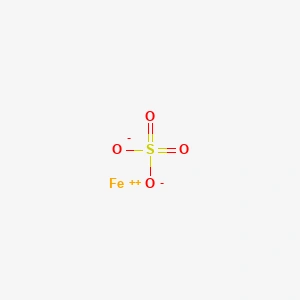
Ferrous sulfate

Ferrous sulfate, identified by CAS number 7720-78-7, is a significant inorganic salt also known as iron(II) sulfate. While the anhydrous form is a white crystalline solid, the compound is frequently utilized in its hydrated forms, most notably the heptahydrate. As a chemical raw material, it is valued for providing a soluble source of divalent iron

Ferrous sulfate Read More »

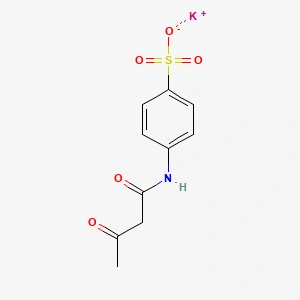
Potassium 4-acetoacetylaminobenzenesulfonate

Potassium 4-acetoacetylaminobenzenesulfonate (CAS 70321-85-6) is a specialized organic intermediate, specifically the potassium salt of an acetoacetylated aromatic sulfonic acid. It is characterized by the presence of a reactive acetoacetyl group attached to a benzenesulfonate scaffold. This structure provides a unique balance of water solubility and chemical reactivity, making it a valuable building block in organic

Potassium 4-acetoacetylaminobenzenesulfonate Read More »

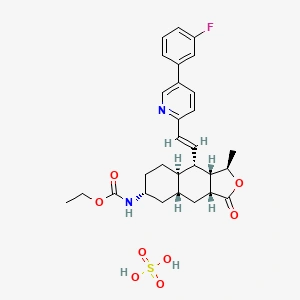
Vorapaxar sulfate

Vorapaxar sulfate, identified by CAS number 705260-08-8, is a high-purity chemical compound utilized primarily as a research material and pharmaceutical intermediate. Chemically, it is the sulfate salt of a tricyclic hymenidin derivative, characterized by its specific molecular architecture designed to interact with protease-activated receptor-1 (PAR-1). As a raw material, it typically appears as a crystalline

Vorapaxar sulfate Read More »

Isotridecanol, ethoxylated

Isotridecanol, ethoxylated (CAS 69011-36-5) is a versatile non-ionic surfactant belonging to the fatty alcohol polyglycol ether family. Synthesized through the ethoxylation of branched isotridecyl alcohol, this material is characterized by its excellent wetting, emulsifying, and dispersing capabilities. It typically appears as a clear to slightly cloudy liquid or paste, depending on the degree of ethoxylation.

Isotridecanol, ethoxylated Read More »

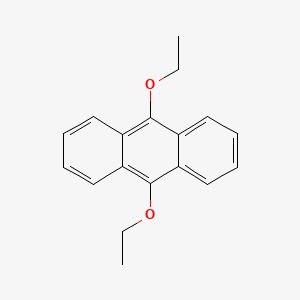
9,10-Diethoxyanthracene

9,10-Diethoxyanthracene (CAS 68818-86-0) is a specialized anthracene derivative characterized by the presence of ethoxy substituents at the 9 and 10 positions of the tricyclic aromatic framework. This modification significantly alters the solubility and electronic properties of the parent anthracene molecule, making it a valuable intermediate and functional component in advanced materials science. As a polycyclic

9,10-Diethoxyanthracene Read More »

Alkyl(C12-18)dimethyl(ethylbenzyl)ammonium chloride

Alkyl(C12-18)dimethyl(ethylbenzyl)ammonium chloride, identified by CAS number 68956-79-6, is a high-performance cationic surfactant belonging to the quaternary ammonium compound family. This material features a diverse alkyl chain distribution ranging from dodecyl (C12) to octadecyl (C18), which enhances its surface-active properties and broadens its efficacy across various environments. Chemically, it consists of a quaternary nitrogen atom bonded

Alkyl(C12-18)dimethyl(ethylbenzyl)ammonium chloride Read More »

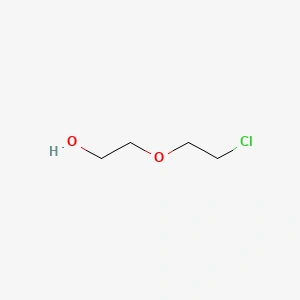
2-(2-Chloroethoxy)ethanol

2-(2-Chloroethoxy)ethanol, identified by CAS number 628-89-7, is a versatile organic compound characterized by its dual functional nature, containing both a primary hydroxyl group and a chloroethyl ether linkage. Also known as diethylene glycol monochlorohydrin, this chemical serves as a critical building block in the synthesis of various specialty chemicals and functional materials. Physically, it typically

2-(2-Chloroethoxy)ethanol Read More »

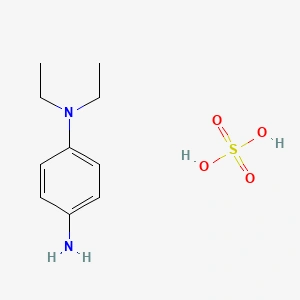
N,N-Diethyl-p-phenylenediamine sulfate

N,N-Diethyl-p-phenylenediamine sulfate, identified by CAS 6283-63-2, is a specialized organic salt that serves as a critical reagent in analytical chemistry and industrial synthesis. Appearing as a white to slightly off-white crystalline powder, this compound is the sulfate derivative of N,N-diethyl-p-phenylenediamine. It is highly valued for its role as a redox indicator, characterized by its ability

N,N-Diethyl-p-phenylenediamine sulfate Read More »

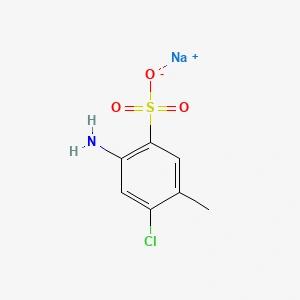
Sodium 4-amino-6-chlorotoluene-3-sulphonate

Sodium 4-amino-6-chlorotoluene-3-sulphonate, identified by CAS number 6627-59-4, is a specialized organic salt widely utilized as a chemical intermediate in the synthesis of high-performance colorants. Structurally, it consists of a toluene backbone substituted with amino, chloro, and sulfonic acid groups, the latter being neutralized as a sodium salt to enhance solubility and stability in aqueous environments.

Sodium 4-amino-6-chlorotoluene-3-sulphonate Read More »

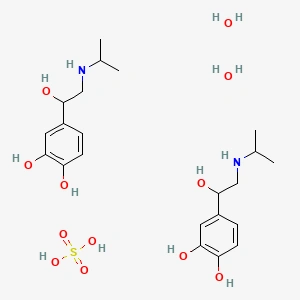
Isoprenaline sulfate

Isoprenaline sulfate, identified by CAS number 6700-39-6, is a significant catecholamine derivative and a sympathomimetic amine salt. Chemically, it is the sulfate salt of isoprenaline, typically appearing as a white to off-white crystalline powder. It is highly soluble in water but exhibits sensitivity to light, air, and alkaline conditions, which can lead to oxidation and

Isoprenaline sulfate Read More »

Alcohols, C12-14, ethoxylated

Alcohols, C12-14, ethoxylated (CAS 68439-50-9) represents a versatile class of non-ionic surfactants derived from the ethoxylation of linear fatty alcohols, specifically those with carbon chain lengths ranging from C12 to C14. As a chemical raw material, this substance is characterized by its amphiphilic nature, combining a hydrophobic alkyl chain with a hydrophilic polyoxyethylene chain. This

Alcohols, C12-14, ethoxylated Read More »

Propyl p-toluenesulfonate

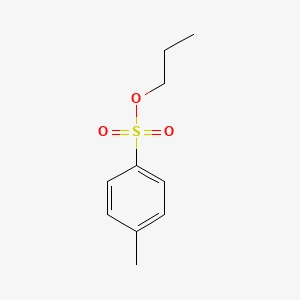
Propyl p-toluenesulfonate, identified by CAS number 599-91-7, is a significant organic ester derived from p-toluenesulfonic acid and n-propanol. Often referred to as n-propyl tosylate, this compound serves as a highly efficient alkylating agent in diverse chemical transformations. Its molecular structure features a p-toluenesulfonyl (tosyl) group, which acts as a superior leaving group compared to traditional

Propyl p-toluenesulfonate Read More »

REQUEST A QUOTE

Product Inquiry — Popup Form