English | 中文 | Español

Chemical Products

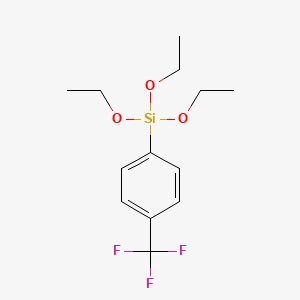
Triethoxy[4-(trifluoromethyl)phenyl]silane

Triethoxy[4-(trifluoromethyl)phenyl]silane is a specialized organosilicon compound characterized by the presence of a trifluoromethyl-substituted phenyl ring and three hydrolyzable ethoxy groups. This unique molecular structure allows it to function as a versatile building block in material science and organic synthesis. The trifluoromethyl group imparts significant electronegativity and hydrophobic properties, while the triethoxysilane moiety facilitates covalent bonding

Triethoxy[4-(trifluoromethyl)phenyl]silane Read More »
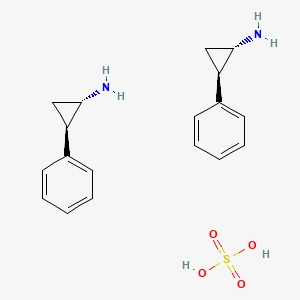
Tranylcypromine hemisulfate

Tranylcypromine hemisulfate, identified by CAS number 13492-01-8, is the sulfate salt of a substituted cyclopropylamine. This compound is characterized by its unique trans-phenylcyclopropylamine structure, which confers specific biochemical reactivity. As a chemical raw material, it typically appears as a white to off-white crystalline powder with high purity levels suitable for laboratory and industrial synthesis. Its

Tranylcypromine hemisulfate Read More »

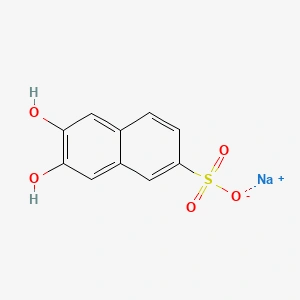
Sodium 2,3-dihydroxynaphthalene-6-sulfonate

Sodium 2,3-dihydroxynaphthalene-6-sulfonate, identified by CAS 135-53-5, is a specialized organic salt characterized by its naphthalene core substituted with two hydroxyl groups and a sulfonic acid sodium salt moiety. This compound typically appears as a fine crystalline powder and exhibits significant solubility in aqueous environments, a property attributed to its polar functional groups. As a functionalized

Sodium 2,3-dihydroxynaphthalene-6-sulfonate Read More »

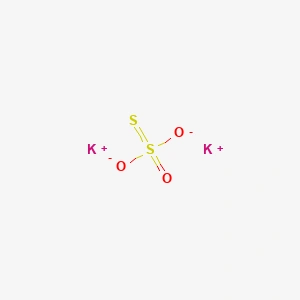
Potassium thiosulfate

Potassium thiosulfate, identified by CAS number 10294-66-3, is an inorganic compound typically encountered as a white crystalline solid or a concentrated aqueous solution. As a salt of thiosulfuric acid, it serves as a versatile source of both potassium and sulfur, two essential elements in various chemical and biological processes. It is characterized by its strong

Potassium thiosulfate Read More »

Titanium(IV) oxysulfate

Titanium(IV) oxysulfate, also known as titanyl sulfate, is an inorganic compound typically encountered as a white or yellowish crystalline solid. It is synthesized through the reaction of titanium dioxide with concentrated sulfuric acid. This chemical is highly hygroscopic and serves as a crucial intermediate in the sulfate process for producing titanium dioxide pigments. Due to

Titanium(IV) oxysulfate Read More »

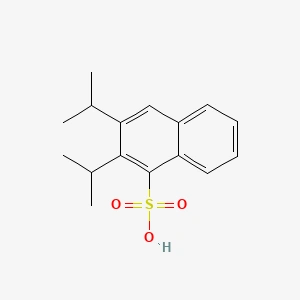
Sodium diisopropylnaphthalenesulfonate

Sodium diisopropylnaphthalenesulfonate, identified by CAS number 1322-93-6, is a high-performance anionic surfactant belonging to the alkyl naphthalene sulfonate (ANS) family. Characterized by its robust chemical structure, this compound exhibits exceptional stability across a wide range of pH levels and in the presence of high electrolyte concentrations. It typically appears as a light-colored powder or liquid

Sodium diisopropylnaphthalenesulfonate Read More »

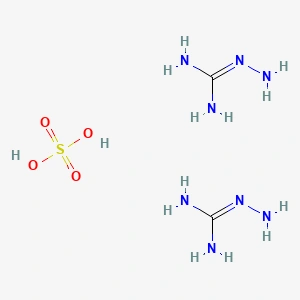
Aminoguanidine sulfate

Aminoguanidine sulfate, identified by CAS number 996-19-0, is a stable, white crystalline salt derived from the reaction of aminoguanidine with sulfuric acid. As a versatile nitrogen-rich intermediate, it serves as a critical building block in various organic synthesis pathways. The compound is valued for its high purity and consistent reactivity, making it a reliable precursor

Aminoguanidine sulfate Read More »

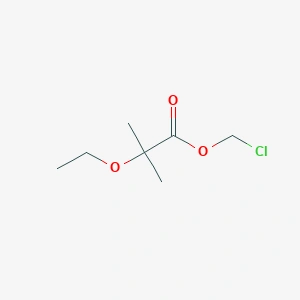
Chloromethyl 2-ethoxy-2-methylpropanoate

Chloromethyl 2-ethoxy-2-methylpropanoate, identified by CAS number 1000296-74-1, is a specialized organic intermediate primarily utilized in the pharmaceutical and fine chemical industries. This compound features a chloromethyl ester functional group attached to a branched ethoxy-substituted propanoate backbone. Its unique structural configuration makes it a valuable reagent for the synthesis of complex molecules, particularly where the introduction

Chloromethyl 2-ethoxy-2-methylpropanoate Read More »

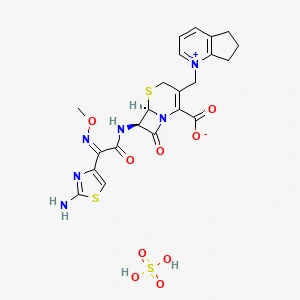
Cefpirome sulfate

Cefpirome sulfate (CAS 98753-19-6) is a sophisticated fourth-generation cephalosporin derivative utilized primarily as a high-purity chemical intermediate and reference standard in pharmaceutical research. Chemically, it is characterized by its zwitterionic structure, featuring a quaternary ammonium group at the C-3 position of the cephem nucleus, which enhances its penetration through the outer membrane of Gram-negative organisms.

Cefpirome sulfate Read More »

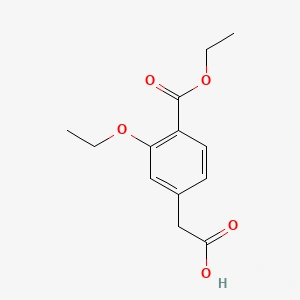
[3-Ethoxy-4-(ethoxycarbonyl)phenyl]acetic acid

[3-Ethoxy-4-(ethoxycarbonyl)phenyl]acetic acid, identified by CAS number 99469-99-5, is a high-purity organic building block characterized by its substituted aromatic framework. This compound features a phenylacetic acid core with an ethoxy group at the meta-position and an ethoxycarbonyl group at the para-position relative to the acetic acid side chain. As a white to off-white crystalline solid, it

[3-Ethoxy-4-(ethoxycarbonyl)phenyl]acetic acid Read More »

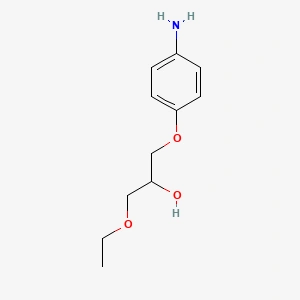
1-(4-Aminophenoxy)-3-ethoxypropan-2-ol

1-(4-Aminophenoxy)-3-ethoxypropan-2-ol, identified by CAS number 94056-98-1, is a versatile organic building block characterized by its multi-functional molecular structure. It features a primary aromatic amine group attached to a phenoxy backbone, which is further substituted with a 3-ethoxypropan-2-ol side chain. This combination of functional groups—specifically the amine, ether, and secondary hydroxyl moieties—renders the compound highly reactive

1-(4-Aminophenoxy)-3-ethoxypropan-2-ol Read More »

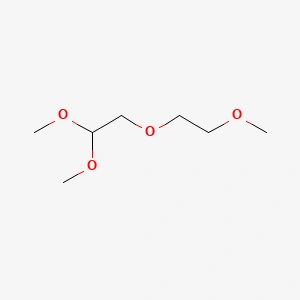
1,1-Dimethoxy-2-(2-methoxyethoxy)ethane

1,1-Dimethoxy-2-(2-methoxyethoxy)ethane, identified by CAS 94158-44-8, is a specialized organic building block primarily utilized as a protected aldehyde intermediate in fine chemical synthesis. Structurally, the compound features a dimethyl acetal group and a methoxyethoxy ether chain, a combination that provides unique chemical stability and solubility characteristics. As an acetal, it remains stable under neutral and basic

1,1-Dimethoxy-2-(2-methoxyethoxy)ethane Read More »

Methoxyethoxyundecyltrichlorosilane

Methoxyethoxyundecyltrichlorosilane (CAS 943349-49-3) is a specialized organosilicon compound utilized primarily as a surface modification agent and molecular linker in advanced material science. Characterized by a long eleven-carbon undecyl spacer chain, it features a terminal trichlorosilyl group and a methoxyethoxy moiety. The trichlorosilyl functionality is highly reactive toward hydroxylated surfaces, such as glass, silicon dioxide, and

Methoxyethoxyundecyltrichlorosilane Read More »

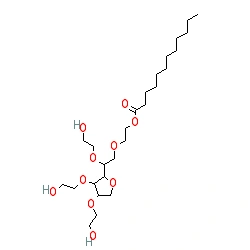
Polysorbate 40

Polysorbate 40, identified by CAS number 9005-66-7, is a non-ionic surfactant and emulsifier derived from ethoxylated sorbitan esterified with palmitic acid. Chemically known as polyoxyethylene (20) sorbitan monopalmitate, it typically presents as a viscous, amber-colored liquid at room temperature. This material is characterized by its high hydrophilic-lipophilic balance (HLB) value, making it particularly effective at

Polysorbate 40 Read More »

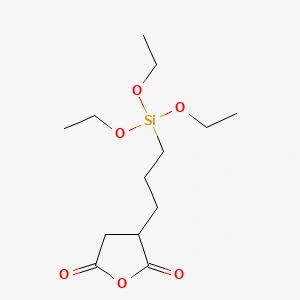
3-(Triethoxysilyl)propylsuccinic anhydride

3-(Triethoxysilyl)propylsuccinic anhydride, identified by CAS 93642-68-3, is a bifunctional organosilane characterized by its reactive succinic anhydride group and hydrolyzable triethoxysilyl moiety. This chemical serves as a versatile bridge between inorganic substrates and organic polymer matrices. The triethoxysilyl group facilitates covalent bonding to hydroxyl-rich surfaces such as silica, glass, and metal oxides through silanol formation and

3-(Triethoxysilyl)propylsuccinic anhydride Read More »

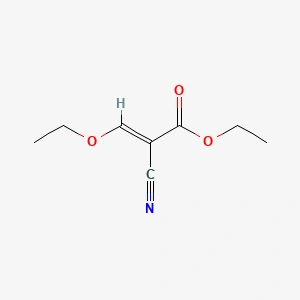
Ethyl (ethoxymethylene)cyanoacetate

Ethyl (ethoxymethylene)cyanoacetate, identified by CAS number 94-05-3, is a highly functionalized organic compound that serves as a pivotal building block in fine chemical synthesis. Structurally, it features a cyano group and an ethyl ester group adjacent to an ethoxymethylene moiety, creating a versatile electrophilic center. This unique arrangement allows for a wide range of chemical

Ethyl (ethoxymethylene)cyanoacetate Read More »

REQUEST A QUOTE

Product Inquiry — Popup Form