English | 中文 | Español

Chemical Products

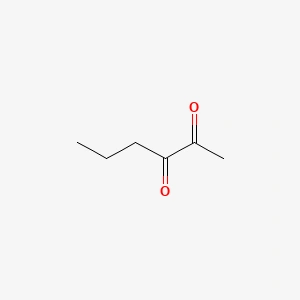
2 3 Hexanedione 3848 24 6 Structure

2,3-Hexanedione

2,3-Hexanedione, identified by CAS number 3848-24-6, is a vicinal diketone characterized by its distinct yellow liquid appearance and a potent, buttery aroma. As an alpha-diketone, it possesses two adjacent carbonyl groups, which significantly influence its chemical reactivity and organoleptic properties. It is naturally occurring in various food items, such as coffee and roasted nuts, and
2,3-Hexanedione Read More »

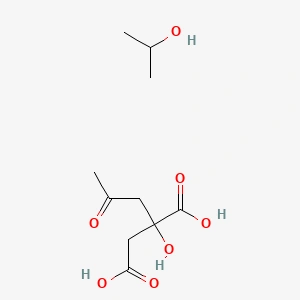
Isopropyl Citrate 39413 05 3 Structure

Isopropyl citrate

Isopropyl citrate, identified by CAS 39413-05-3, is a specialized ester derived from the reaction of citric acid with isopropyl alcohol. This compound typically exists as a mixture of mono-, di-, and tri-isopropyl esters, resulting in a versatile chemical profile characterized by its solubility in both aqueous and organic media. Its primary function in industrial settings

Isopropyl citrate Read More »

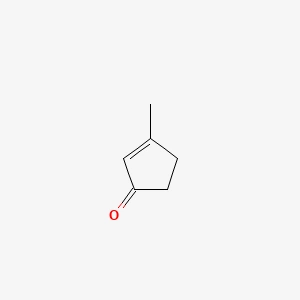
3 Methyl 2 Cyclopenten 1 One 2758 18 1 Structure

3-Methyl-2-cyclopenten-1-one

3-Methyl-2-cyclopenten-1-one, identified by CAS number 2758-18-1, is a cyclic alpha, beta-unsaturated ketone characterized by its distinct five-membered ring structure. This organic compound typically presents as a colorless to pale yellow liquid and is recognized for its unique organoleptic profile, often described as having sweet, nutty, or caramel-like aromatic qualities. Its chemical architecture, featuring a conjugated

3-Methyl-2-cyclopenten-1-one Read More »

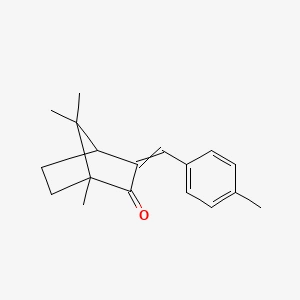
3 4 Methylbenzylidene Camphor 36861 47 9 Structure

3-(4′-Methylbenzylidene)camphor

3-(4′-Methylbenzylidene)camphor, identified by CAS 36861-47-9, is a lipophilic organic camphor derivative widely recognized for its efficacy as a photostabilizing agent. This chemical compound typically appears as a white to off-white crystalline powder and is characterized by its ability to absorb ultraviolet radiation, particularly within the UV-B spectrum. Due to its hydrophobic nature, it is readily

3-(4′-Methylbenzylidene)camphor Read More »

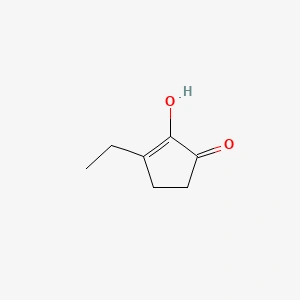
3 Ethyl 2 Hydroxy 2 Cyclopenten 1 One 21835 01 8 Structure

3-Ethyl-2-hydroxy-2-cyclopenten-1-one

3-Ethyl-2-hydroxy-2-cyclopenten-1-one, identified by CAS number 21835-01-8, is a cyclic enolone derivative widely recognized for its potent organoleptic properties. Often referred to as ethyl cyclopentenolone or ethyl cyclotene, this compound typically presents as a white to pale yellow crystalline solid. It is characterized by its remarkable stability and solubility in organic solvents, making it a versatile

3-Ethyl-2-hydroxy-2-cyclopenten-1-one Read More »

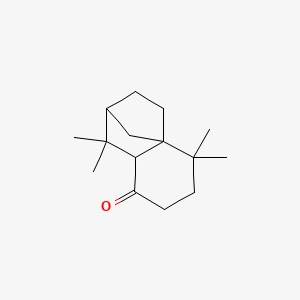
1 3 4 6 7 8a Hexahydro 1 1 5 5 Tetramethyl 2H 2 4a Methanonaphthalen 8 5H One 23787 90 8 Structure

1,3,4,6,7,8a-Hexahydro-1,1,5,5-tetramethyl-2H-2,4a-methanonaphthalen-8(5H)-one

1,3,4,6,7,8a-Hexahydro-1,1,5,5-tetramethyl-2H-2,4a-methanonaphthalen-8(5H)-one, widely recognized in the specialty chemicals industry as Isolongifolanone, is a sophisticated polycyclic ketone derived from the sesquiterpene longifolene. This compound is characterized by its distinct woody and amber olfactory profile, making it a staple in high-end fragrance formulation. As a derivative of natural pine resin components, it bridges the gap between natural precursors

1,3,4,6,7,8a-Hexahydro-1,1,5,5-tetramethyl-2H-2,4a-methanonaphthalen-8(5H)-one Read More »

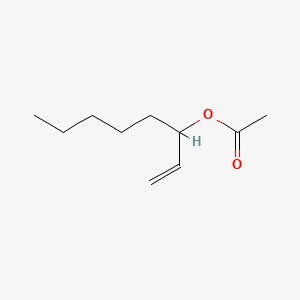
1 Octen 3 Yl Acetate 2442 10 6 Structure

1-Octen-3-yl acetate

1-Octen-3-yl acetate, identified by CAS number 2442-10-6, is an organic ester characterized by its distinctive organoleptic profile. Often referred to as amyl vinyl carbinyl acetate, this clear to pale yellow liquid is naturally occurring in various essential oils, including lavender and mint, as well as in certain mushroom species. Its chemical structure features an unsaturated

1-Octen-3-yl acetate Read More »

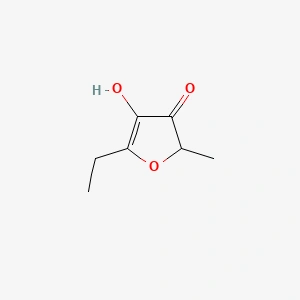
5 Ethyl 4 Hydroxy 2 Methyl 3 2H Furanone 27538 09 6 Structure

5-Ethyl-4-hydroxy-2-methyl-3(2H)-furanone

5-Ethyl-4-hydroxy-2-methyl-3(2H)-furanone, identified by CAS 27538-09-6, is a cyclic keto-enol compound belonging to the furanone family. Often referred to as homofuraneol, this chemical is recognized for its potent organoleptic properties, characterized by a distinctively sweet, caramel-like aroma with nuances of cooked fruit. It typically appears as a colorless to pale yellow liquid or solid, depending on

5-Ethyl-4-hydroxy-2-methyl-3(2H)-furanone Read More »

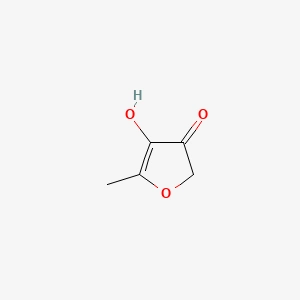
4 Hydroxy 5 Methyl 3 Furanone 19322 27 1 Structure

4-Hydroxy-5-methyl-3-furanone

4-Hydroxy-5-methyl-3-furanone, identified by CAS number 19322-27-1, is a significant organic compound within the furanone family, widely recognized for its distinctive organoleptic properties. Often referred to as chicory furanone, this white to pale yellow crystalline solid or liquid possesses a potent aroma reminiscent of caramel, burnt sugar, and roasted coffee. Its chemical structure, featuring a hydroxyl

4-Hydroxy-5-methyl-3-furanone Read More »

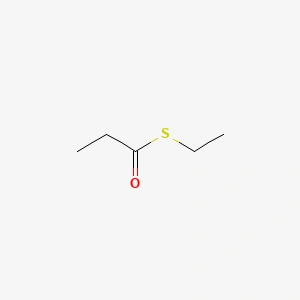
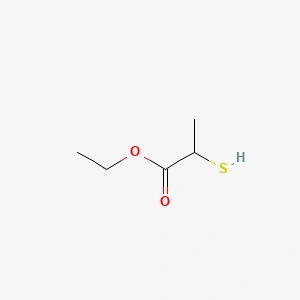
Propanoic Acid 2 Mercapto Ethyl Ester 19788 49 9 Structure

Propanoic acid, 2-mercapto-, ethyl ester

Propanoic acid, 2-mercapto-, ethyl ester, also known as ethyl 2-mercaptopropionate (CAS 19788-49-9), is a versatile organosulfur compound characterized by its dual-functional thiol and ester groups. This clear, colorless to pale yellow liquid is recognized for its potent and distinctive aroma, which combines sulfurous notes with subtle fruity undertones. Its chemical structure makes it a highly

Propanoic acid, 2-mercapto-, ethyl ester Read More »

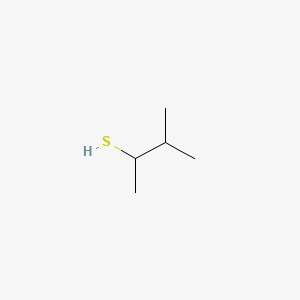
3 Methylbutane 2 Thiol 2084 18 6 Structure

3-Methylbutane-2-thiol

3-Methylbutane-2-thiol, identified by CAS number 2084-18-6, is a volatile organosulfur compound characterized by its distinct and potent sulfurous aroma. As a secondary thiol with a branched pentane backbone, it exhibits the typical reactivity of mercaptans, including the ability to form disulfides and participate in nucleophilic substitution reactions. This colorless to pale yellow liquid is valued

3-Methylbutane-2-thiol Read More »

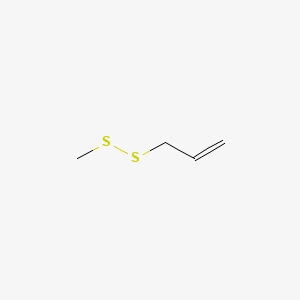
ALLYL METHYL DISULFIDE 2179 58 0 Structure

ALLYL METHYL DISULFIDE

Allyl methyl disulfide, identified by CAS number 2179-58-0, is a volatile organosulfur compound naturally occurring in various Allium species, most notably garlic and onions. It is characterized by a distinct, pungent, and alliaceous aroma that is highly recognizable even at low concentrations. Chemically, it consists of an allyl group and a methyl group linked by

ALLYL METHYL DISULFIDE Read More »

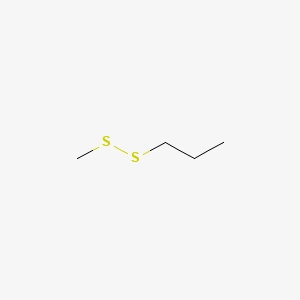
Methyl Propyl Disulfide 2179 60 4 Structure

Methyl propyl disulfide

Methyl propyl disulfide (CAS 2179-60-4) is a volatile organosulfur compound characterized by its distinct, pungent aroma, often described as reminiscent of garlic or onions. As an asymmetrical disulfide, it consists of a methyl group and a propyl group linked by a disulfide bridge. This clear to pale yellow liquid is naturally occurring in various Allium

Methyl propyl disulfide Read More »

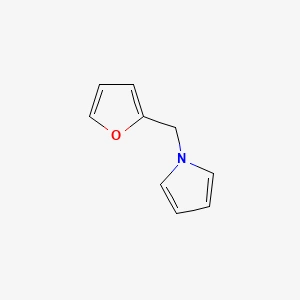
1 Furan 2 Ylmethyl 1H Pyrrole 1438 94 4 Structure

1-(Furan-2-ylmethyl)-1H-pyrrole

1-(Furan-2-ylmethyl)-1H-pyrrole, identified by CAS number 1438-94-4, is a heterocyclic organic compound characterized by the linkage of a pyrrole ring to a furan moiety via a methylene bridge. Often referred to as 1-furfurylpyrrole, this molecule exhibits chemical properties typical of both pyrrole and furan systems, making it a subject of interest in the study of aromatic

1-(Furan-2-ylmethyl)-1H-pyrrole Read More »

REQUEST A QUOTE

Product Inquiry — Popup Form