English | 中文 | Español

Chemical Products

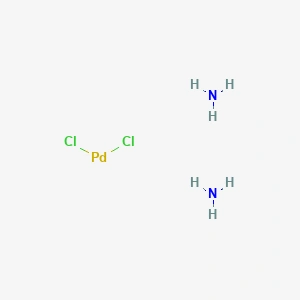
DichlorodiamminepalladiumII 14323 43 4 Structure

Dichlorodiamminepalladium(II)

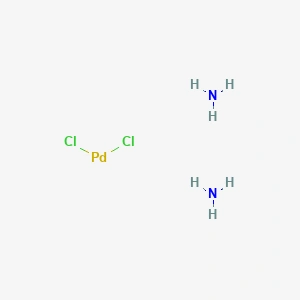
Dichlorodiamminepalladium(II) (CAS: 14323-43-4) is a yellow crystalline palladium ammine complex that is stable, easy to weigh, and soluble in aqueous ammonia. It is a well-established precursor for supported palladium catalysts, palladium films and coatings, and electroless or electroplating bath formulations, and it is also used to prepare other palladium ammine complexes. The compound decomposes cleanly

Dichlorodiamminepalladium(II) Read More »

Sodium Diethyldithiocarbamate 148 18 5 Structure

Sodium Diethyldithiocarbamate

Sodium Diethyldithiocarbamate (CAS: 148-18-5) is an odorless white to off-white crystalline solid that is soluble in water and widely used as a chelating and complexing agent. It forms intensely colored complexes with copper and many other metals, which underpins its role in metal determination, separation, and solvent-extraction processes. In industry it serves as a rubber

Sodium Diethyldithiocarbamate Read More »

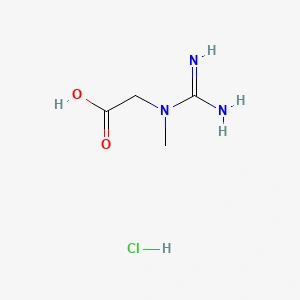
Creatine Hydrochloride 17050 09 8 Structure

Creatine Hydrochloride

Creatine Hydrochloride (CAS: 17050-09-8) is a white crystalline supplement ingredient formed by attaching a hydrochloride group to creatine. The hydrochloride form is markedly more soluble in water than creatine monohydrate, which improves mixing and dispersion in ready-to-drink beverages and powdered formulations. It is a popular ingredient in sports nutrition products aimed at muscle strength, power

Creatine Hydrochloride Read More »

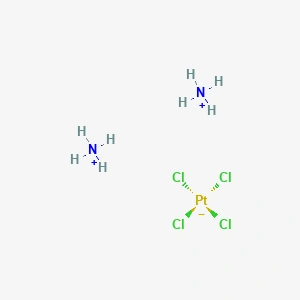
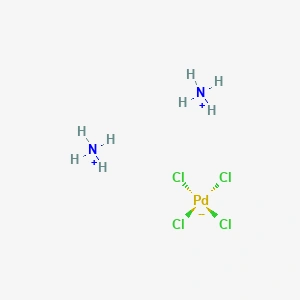
Ammonium TetrachloroplatinateII 13820 41 2 Structure

Ammonium Tetrachloroplatinate(II)

Ammonium Tetrachloroplatinate(II) (CAS: 13820-41-2) is a yellow to orange crystalline platinum salt that is stable in air and soluble in water. It is a practical platinum source for the preparation of supported platinum catalysts, platinum fine powders, and platinum complexes used across the chemical and electronics industries. The salt decomposes cleanly on heating to deposit

Ammonium Tetrachloroplatinate(II) Read More »

RutheniumIII Iodide 13896 65 6 Structure

Ruthenium(III) Iodide

Ruthenium(III) Iodide (CAS: 13896-65-6) is a black crystalline powder that serves as a high-ruthenium-content source for specialty synthesis. It is used in the preparation of ruthenium complexes and catalysts, in thin-film and materials research, and in processes where an iodide-based ruthenium precursor is preferred over more common chloride salts. The compound is insoluble in water

Ruthenium(III) Iodide Read More »

Selectfluor 140681 55 6 Structure

Selectfluor

Selectfluor (CAS: 140681-55-6) is a stable, crystalline electrophilic fluorinating reagent that delivers fluorine to a wide range of organic substrates under mild conditions. It replaces hazardous elemental fluorine and chlorine monofluoride in many syntheses, offering safe bench-scale handling as a free-flowing powder that can be stored without pressure equipment or special facilities. The reagent is

Selectfluor Read More »

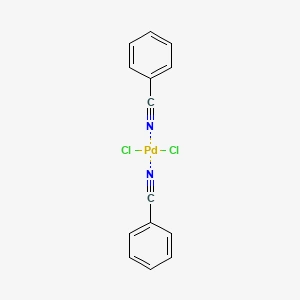
BisBenzonitrilePalladiumII Dichloride 14220 64 5 Structure

Bis(Benzonitrile)Palladium(II) Dichloride

Bis(Benzonitrile)Palladium(II) Dichloride (CAS: 14220-64-5) is a yellow crystalline palladium complex in which labile benzonitrile ligands make it a highly reactive yet air-stable palladium source. It is one of the most widely used starting materials for preparing palladium catalysts, including cross-coupling systems for Suzuki, Heck, and Sonogashira reactions, as well as carbonylation and hydrogenation catalysts. The

Bis(Benzonitrile)Palladium(II) Dichloride Read More »

DiamminedichloropalladiumII 13782 33 7 Structure

Diamminedichloropalladium(II)

Diamminedichloropalladium(II) (CAS: 13782-33-7) is a yellow to orange crystalline palladium ammine complex that is soluble in water and readily reduced to palladium metal. It supplies palladium in a stable, well-defined form that decomposes cleanly on heating, which is why it is favoured for preparing supported palladium catalysts, palladium films and coatings, and for electroless or

Diamminedichloropalladium(II) Read More »
Ammonium TetrachloropalladateII 13820 40 1 Structure

Ammonium Tetrachloropalladate(II)

Ammonium Tetrachloropalladate(II) (CAS: 13820-40-1) is an olive-green to brown crystalline palladium salt that dissolves readily in water, giving a stable and well-defined palladium source for industrial processes. It is one of the preferred complexes for preparing palladium metal particles, and it also forms palladium-creatinine complexes that find use in catalysis and semiconductor applications. Because it

Ammonium Tetrachloropalladate(II) Read More »

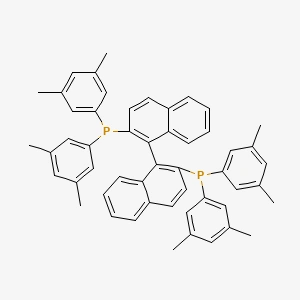
S XylBINAP 135139 00 3 Structure

(S)-XylBINAP

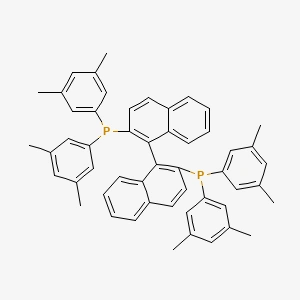
(S)-XylBINAP (CAS: 135139-00-3) is a chiral, axially dissymmetric bisphosphine ligand in which two bis(3,5-dimethylphenyl)phosphino groups are attached to a binaphthyl backbone. The 3,5-xylyl substituents are larger and more electron-rich than phenyl groups, so the ligand creates a tighter, more selective environment around a metal centre and gives high enantioselectivity in asymmetric hydrogenation and related transformations,

(S)-XylBINAP Read More »

R XylBINAP 137219 86 4 Structure

(R)-XylBINAP

(R)-XylBINAP (CAS: 137219-86-4) is the (R) enantiomer of the bulky, electron-rich chiral bisphosphine ligand XylBINAP, supplied as a white to pale yellow crystalline powder. The binaphthyl backbone fixes the two bis(3,5-dimethylphenyl)phosphino groups in a rigid chiral arrangement that transfers asymmetry efficiently to a coordinated metal, so it complements the (S) isomer by giving access to

(R)-XylBINAP Read More »

PlatinumIV Oxide 1314 15 4 Structure

Platinum(IV) Oxide

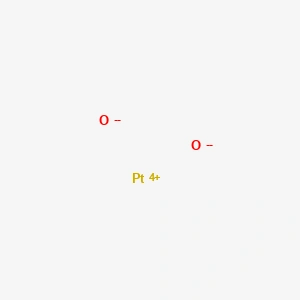
Platinum(IV) Oxide (CAS: 1314-15-4), best known as Adams’ catalyst, is a brown to black platinum oxide powder with a high platinum content and excellent hydrogenation activity. Unlike platinum black it stores and handles more conveniently, and it forms the active hydrogenation catalyst in situ when reduced by hydrogen during a reaction. This makes it a

Platinum(IV) Oxide Read More »

Montmorillonite 1318 93 0 Structure

Montmorillonite

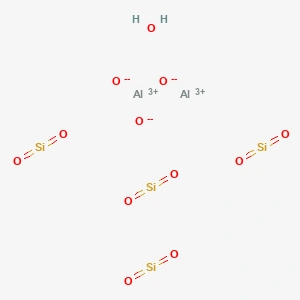
Montmorillonite (CAS 1318-93-0) is a naturally occurring layered aluminosilicate clay of the smectite group. Its structure allows water and cations to enter between the silicate layers, so the clay swells, thickens liquids and exchanges ions. As a natural mineral its exact composition varies with source; specifications are based on moisture, particle size, cation-exchange capacity and

Montmorillonite Read More »

REQUEST A QUOTE

Product Inquiry — Popup Form