English | 中文 | Español

Chemical Products

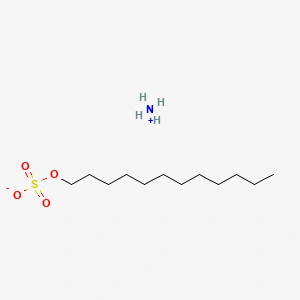
Ammonium Lauryl Sulfate 2235 54 3 Structure

Ammonium Lauryl Sulfate

Ammonium Lauryl Sulfate (CAS: 2235-54-3) is an anionic surfactant featuring a C12 alkyl chain sulfate neutralized with ammonium rather than sodium. This clear aqueous solution or paste delivers strong detergency, rapid wetting, and abundant foam, with the ammonium counterion offering slightly different solubility and mildness characteristics compared to sodium lauryl sulfate. It is extensively used

Ammonium Lauryl Sulfate Read More »
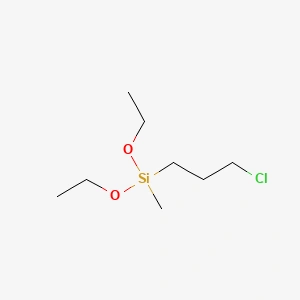
Diethoxymethylsilane 13501 76 3 Structure

diethoxymethylsilane

diethoxymethylsilane (CAS: 13501-76-3) refers to chloromethyldiethoxymethylsilane, a reactive organosilane featuring a hydrolyzable chloromethyl group and two ethoxy groups on silicon. This dual-functionality building block is valued in silicone chemistry, where the ethoxy groups undergo moisture-catalyzed hydrolysis and condensation for cross-linking or surface bonding, while the chloromethyl group provides a reactive handle for nucleophilic substitution, quaternization,

diethoxymethylsilane Read More »

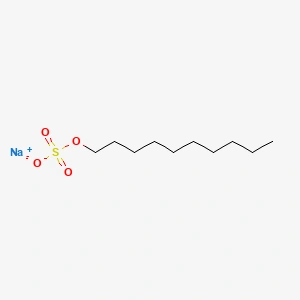
Sodium Decyl Sulfate 142 87 0 Structure

Sodium Decyl Sulfate

Sodium Decyl Sulfate (CAS: 142-87-0) is an anionic surfactant featuring a C10 alkyl chain terminated by a sulfate group neutralized with sodium. This water-soluble surfactant offers intermediate hydrophobicity between shorter and longer chain sulfates, providing effective wetting, foaming, and emulsifying performance with lower irritation potential than longer-chain homologs. It is widely used in personal care

Sodium Decyl Sulfate Read More »

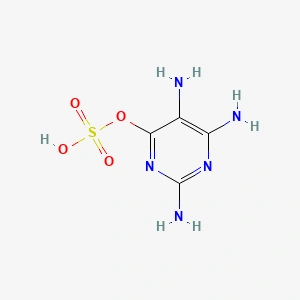
4 Pyrimidinol 2 5 6 Triamino Hydrogen Sulfate 1603 02 7 Structure

4-Pyrimidinol, 2,5,6-triamino-, hydrogen sulfate

4-Pyrimidinol, 2,5,6-triamino-, hydrogen sulfate (CAS: 1603-02-7), also named 2,4,5-triamino-6-hydroxypyrimidine sulfate, is a polyfunctional pyrimidine derivative closely related to guanine in structure. This white crystalline compound serves as a critical intermediate in the industrial synthesis of folic acid, where it provides the pyrimidine ring that is elaborated into the pterin portion of the vitamin molecule. Its

4-Pyrimidinol, 2,5,6-triamino-, hydrogen sulfate Read More »

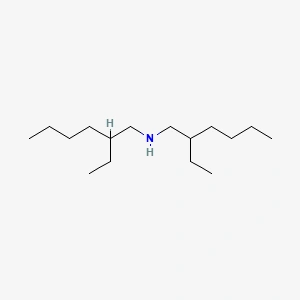
Bisamine 106 20 7 Structure

Bisamine

Bisamine (CAS: 106-20-7), chemically Bis(2-ethylhexyl)amine, is a high-boiling, water-insoluble secondary fatty amine featuring two branched C8 alkyl chains attached to a secondary nitrogen center. This clear, colorless to pale-yellow liquid combines strong basicity with excellent solubility in hydrocarbons and organic solvents, making it a versatile intermediate for surfactants, corrosion inhibitors, and specialty additives. Its secondary

Bisamine Read More »

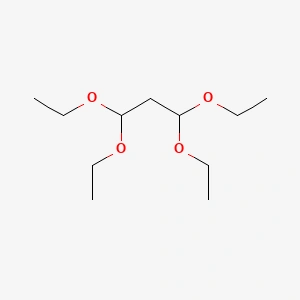
1 1 3 3 Tetraethoxypropane 122 31 6 Structure

1,1,3,3-Tetraethoxypropane

1,1,3,3-Tetraethoxypropane (CAS: 122-31-6) is the tetraethyl acetal of malondialdehyde, serving as a stable, storable precursor to this highly reactive dialdehyde. In aqueous or acidic conditions, the acetal undergoes hydrolysis to release malondialdehyde in situ, enabling controlled participation in condensation reactions that would be impractical with the free aldehyde. This clear liquid is widely employed in

1,1,3,3-Tetraethoxypropane Read More »

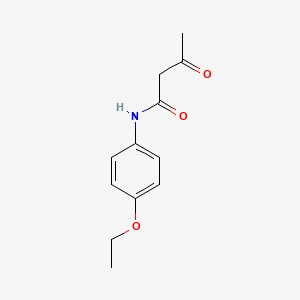
N 3 Oxobutanamide 122 82 7 Structure

N–3-oxobutanamide

N–3-oxobutanamide (CAS: 122-82-7), also known as p-acetoacetophenetidide or 4′-ethoxyacetoacetanilide, is an acetoacetylated aromatic amide combining an activated methylene keto-amide with an ethoxy-substituted anilide structure. This crystalline intermediate is primarily valued in dye chemistry, where the reactive methylene group between the two carbonyl functions condenses with diazonium salts and coupling components to build azo dye structures

N–3-oxobutanamide Read More »

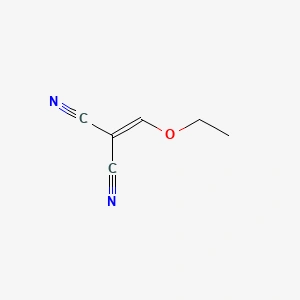
2 Propanedinitrile 123 06 8 Structure

2-propanedinitrile

2-propanedinitrile (CAS: 123-06-8), commonly known as ethoxymethylenemalononitrile (EMMN), is a highly electron-deficient olefin combining a nitrile, an ethoxyvinyl group, and a second nitrile on a compact three-carbon framework. This reactivity profile makes it an exceptional electrophile and cyclocondensation partner in heterocyclic synthesis. It readily reacts with amidines, hydrazines, guanidines, and enaminones to construct pyrimidines, pyrazoles,

2-propanedinitrile Read More »

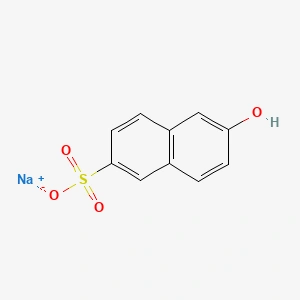
2 Naphthol 6 Sulfonic Acid Sodium 135 76 2 Structure

2-Naphthol-6-sulfonic acid sodium

2-Naphthol-6-sulfonic acid sodium (CAS: 135-76-2), known as Schaeffer’s salt, is a naphthalene-based intermediate combining a reactive naphthol hydroxyl with a sulfonate group that imparts water solubility. This white to off-white crystalline powder is a foundational building block in the dye industry, serving as a coupling component in the synthesis of a wide range of azo

2-Naphthol-6-sulfonic acid sodium Read More »

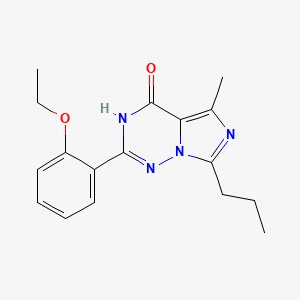
Desulfovardenafil 224789 21 3 Structure

Desulfovardenafil

Desulfovardenafil (CAS: 224789-21-3) is a key synthetic intermediate in the production of vardenafil, a potent phosphodiesterase type 5 (PDE5) inhibitor used in the treatment of erectile dysfunction. Structurally, this compound represents the core imidazotriazinone scaffold of vardenafil prior to sulfonylation, featuring the characteristic 2-ethoxy-5-methyl-7-propyl substitution pattern on the fused heterocyclic system. As a regulated pharmaceutical

Desulfovardenafil Read More »

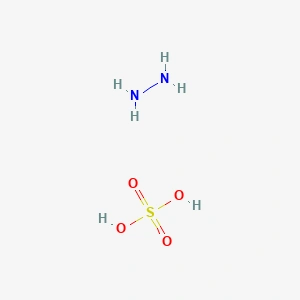
Hydrazine Sulfate 10034 93 2 Structure

Hydrazine Sulfate

Hydrazine sulfate (CAS: 10034-93-2) is a stable, crystalline salt of hydrazine widely employed as a reducing agent, chemical intermediate, and oxygen scavenger across industrial and laboratory applications. It provides a safer, more convenient solid form of hydrazine, releasing the active reducing species upon dissolution in water. In polymer chemistry, it serves as a blowing agent

Hydrazine Sulfate Read More »

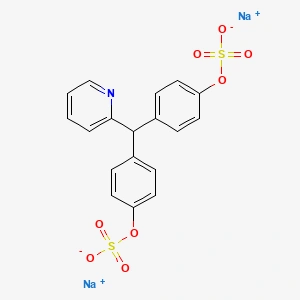
Sodium Picosulfate 10040 45 6 Structure

Sodium Picosulfate

Sodium Picosulfate (CAS: 10040-45-6) is a stimulant laxative used in human medicine and bowel preparation products. Chemically the disodium salt of 4,4′-(pyridin-2-ylmethylene)bisphenol bis(hydrogen sulfate), it acts as a locally effective prodrug that is hydrolyzed by colonic bacteria to release the active diphenolic metabolite, which directly stimulates colonic motility and promotes bowel evacuation. Because of its

Sodium Picosulfate Read More »

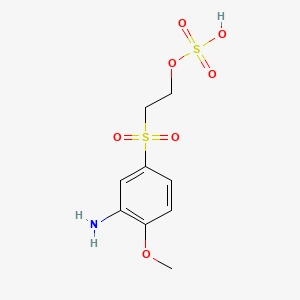
Ethanol 2 Sulfonyl 1 10079 20 6 Structure

Ethanol, 2-[sulfonyl]-, 1-

Ethanol, 2-[sulfonyl]-, 1- (CAS: 10079-20-6) is a functionalized aromatic intermediate featuring both a sulfonyl group and a reactive ethanol side chain, typically supplied as the hydrogen sulfate salt form. The dual functionality of this compound, an aromatic sulfone or sulfonamide core combined with a terminal hydroxyl group, makes it a versatile building block in fine

Ethanol, 2-[sulfonyl]-, 1- Read More »

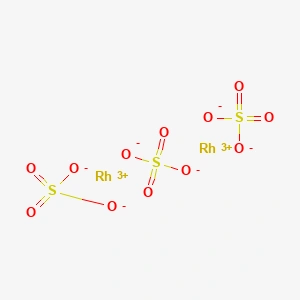
Sulfuric Acid Rhodium Salt 10489 46 0 Structure

Sulfuric acid, rhodium salt

Sulfuric acid, rhodium salt (CAS: 10489-46-0), commonly known as rhodium(III) sulfate, is a precious-metal compound serving as a water-soluble source of rhodium ions for catalytic, electroplating, and materials applications. In catalysis, it acts as a precursor for supported and homogeneous rhodium catalysts employed in hydrogenation, hydroformylation, and carbonylation reactions central to pharmaceutical and fine chemical

Sulfuric acid, rhodium salt Read More »

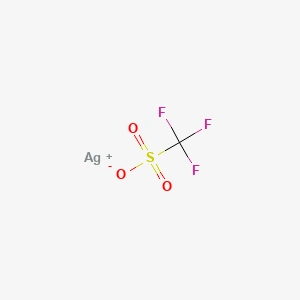
Silver Trifluoromethanesulfonate 2923 28 6 Structure

Silver trifluoromethanesulfonate

Silver trifluoromethanesulfonate (CAS: 2923-28-6), commonly known as silver triflate, is a powerful silver salt of triflic acid widely employed as a Lewis acid catalyst and halide scavenger in advanced organic synthesis. Combining the strong electrophilicity of the silver cation with the weakly coordinating triflate anion, this reagent activates alkyl halides, promotes glycosylation reactions, and facilitates

Silver trifluoromethanesulfonate Read More »

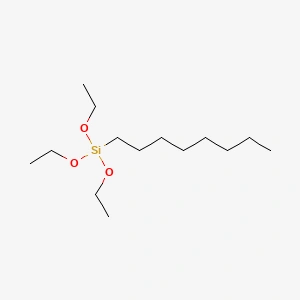
Octyltriethoxysilane 2943 75 1 Structure

Octyltriethoxysilane

Octyltriethoxysilane (CAS: 2943-75-1) is an organosilane coupling agent featuring a hydrophobic n-octyl chain and three hydrolyzable ethoxy groups attached to silicon. In the presence of moisture, the ethoxy groups hydrolyze to reactive silanols that condense onto silica, glass, metal oxides, and mineral surfaces, forming durable covalent bonds, while the octyl chain imparts strong water repellency

Octyltriethoxysilane Read More »

REQUEST A QUOTE

Product Inquiry — Popup Form