1. Fundamental Concepts and Product Classification
1.1 Definition and Functional Architecture
Shampoo is a rinse-off hair and scalp cleansing cosmetic formulated primarily with aqueous surfactant systems, conditioning polymers, functional additives and performance-enhancing ingredients.
Its primary function is to remove sebum, particulate contaminants, sweat residues, dead corneocytes and styling-product buildup from the scalp and hair surface, while maintaining acceptable scalp compatibility and improving hair manageability.
Modern shampoo formulation has evolved from conventional cleansing systems toward multifunctional formulations integrating cleansing, conditioning, scalp care, barrier support and targeted hair-fiber treatment.
A typical shampoo formulation consists of six functional modules:
| Formulation module | Principal ingredients | Primary functions |
|---|---|---|
| Primary surfactant system | Anionic surfactants | Cleansing, emulsification and foaming |
| Secondary surfactant system | Amphoteric and nonionic surfactants | Mildness optimization and foam stabilization |
| Conditioning system | Cationic polymers, silicones and conditioning lipids | Friction reduction, softness and combability |
| Functional active system | Humectants, peptides, botanical extracts and scalp-care actives | Scalp and hair conditioning |
| Rheology and stabilization system | Electrolytes, polymers, suspending agents and chelating agents | Viscosity and physical stability |
| Preservation and sensory system | Preservatives, fragrances, colorants and pearlizing agents | Microbial protection and sensory optimization |
1.2 Classification by Functional Positioning
Modern shampoo products can be categorized according to their targeted scalp and hair conditions.
| Product category | Formulation objectives | Representative ingredients |
|---|---|---|
| Sebum-control shampoo | Remove excess sebum and maintain cleansing efficiency | Anionic surfactants, Zinc PCA and sebum-control actives |
| Moisturizing shampoo | Improve hair hydration and reduce dryness | Panthenol, Betaine, Glycerin and conditioning polymers |
| Anti-dandruff shampoo | Address dandruff-associated scalp conditions | Approved anti-dandruff active ingredients |
| Sensitive-scalp shampoo | Minimize irritation potential | Mild amino-acid-derived and amphoteric surfactants |
| Damaged-hair shampoo | Improve surface conditioning and reduce friction | Amodimethicone, cationic polymers and hydrolyzed proteins |
| Color-protection shampoo | Reduce color loss during repeated washing | Mild surfactant systems and film-forming polymers |
| Scalp-care shampoo | Support scalp hydration and surface-condition management | Panthenol, Niacinamide, prebiotics and soothing agents |
| Clarifying shampoo | Remove accumulated sebum, mineral deposits and styling residues | High-efficiency surfactant blends and chelating agents |
1.3 Classification by Surfactant Chemistry
From a formulation-engineering perspective, the major surfactant systems include:
- Sulfate-based anionic systems.
- Sulfate-free anionic systems.
- Amino-acid-derived surfactant systems.
- Amphoteric-anionic hybrid systems.
- Nonionic-amphoteric mild cleansing systems.
- Biosurfactant-containing sustainable cleansing systems.
These categories are not mutually exclusive. Commercial formulations generally use mixed surfactant architectures to optimize cleansing, mildness, foaming, viscosity and cost.
2. Surfactant Chemistry and Advanced Cleansing Systems
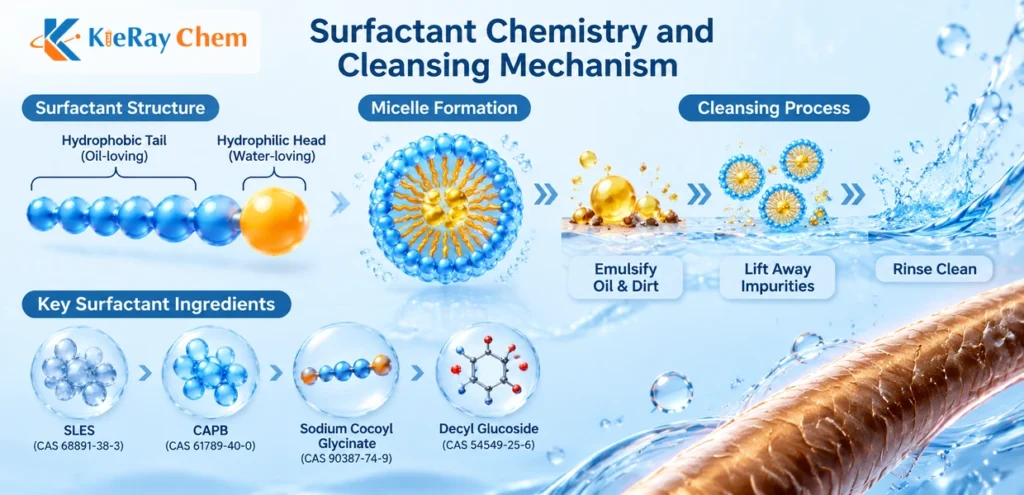
Surfactants determine the interfacial behavior of shampoo formulations. Their molecular structures, charge characteristics, hydrophobic chain lengths and concentration profiles influence micellization, detergency, foam formation, rheology and interactions with hair fibers.
2.1 Anionic Surfactants
Anionic surfactants remain the primary cleansing agents in most conventional shampoo formulations.
Representative ingredients include:
| INCI name | CAS Number | Chemical category | Functional characteristics |
|---|---|---|---|
| Sodium Laureth Sulfate (SLES) | 68891-38-3* | Ether sulfate | High foaming and effective cleansing |
| Sodium Lauryl Sulfate (SLS) | 151-21-3 | Alkyl sulfate | Strong detergency and rapid foam generation |
| Sodium Lauroyl Sarcosinate | 137-16-6 | Acyl sarcosinate | Effective cleansing and formulation flexibility |
| Sodium Cocoyl Glycinate | 90387-74-9* | Acyl glycinate | Mild cleansing and conditioning-oriented formulation potential |
| Potassium Cocoyl Glycinate | 301341-58-2* | Acyl glycinate | Mild cleansing and rich foam under suitable pH conditions |
| Sodium Cocoyl Glutamate | 68187-32-6* | Acyl glutamate | Mild cleansing and skin-compatible formulation potential |
| Sodium Lauroyl Glutamate | 29923-31-7* | Acyl glutamate | Mild cleansing and creamy foam |
| Disodium Lauroyl Glutamate | 3397-65-7* | Acyl glutamate | Mild cleansing and formulation flexibility |
| Sodium Methyl Cocoyl Taurate | 12765-39-8* | Acyl methyl taurate | Dense foam and relatively mild cleansing |
| Sodium Lauroyl Methyl Isethionate | 928663-45-0* | Isethionate | Mild cleansing and creamy foam |
| Sodium Cocoyl Isethionate | 61789-32-0* | Isethionate | Mild cleansing and rich, creamy foam |
| TEA-Lauroyl Glutamate | 68187-30-4* | Acyl glutamate | Mild cleansing and conditioning-oriented formulation |
CAS numbers marked with an asterisk should be confirmed against the exact supplier specification and chemical identity. Commercial fatty-acid-derived surfactants may be mixtures, and their CAS registration can vary by composition and naming convention.
Advanced formulation considerations:
- Amino-acid-derived surfactants exhibit pH-dependent ionization and performance.
- Taurate surfactants can provide favorable foam properties and are frequently used in sulfate-free systems.
- Isethionates offer an alternative route to mild, high-performance cleansing.
- The selection of surfactants should account for active matter, salt tolerance, cloud point, pH compatibility and interaction with conditioning polymers.
A sulfate-free formulation is not automatically milder than a sulfate-containing formulation. The complete surfactant composition, active concentration and finished-product performance determine the actual mildness profile.
2.2 Amphoteric Surfactants
Representative ingredients:
| INCI name | CAS Number | Functional contributions |
|---|---|---|
| Cocamidopropyl Betaine (CAPB) | 61789-40-0* | Foam stabilization, mildness optimization and viscosity modification |
| Coco-Betaine | 68424-94-2* | Foam enhancement and mixed-micelle modification |
| Sodium Cocoamphoacetate | 68334-21-4* | Mild cleansing and foam stabilization |
| Disodium Cocoamphodiacetate | 68650-39-5* | Mildness optimization and compatibility improvement |
| Sodium Lauriminodipropionate | 14960-06-6* | Amphoteric cleansing and formulation flexibility |
Functional contributions:
- Improve foam quality and foam stability.
- Modify the irritation potential of mixed surfactant systems.
- Influence micellar structure and viscosity.
- Improve compatibility between different surfactant classes.
- Facilitate the development of mild cleansing formulations.
CAPB is particularly useful in SLES-based and sulfate-free formulations.
Its quality specification should include active matter, residual amidoamine and dimethylaminopropylamine (DMAPA), because raw-material impurities may influence finished-product compatibility and sensitization risk.
2.3 Nonionic Surfactants
Representative ingredients:
| INCI name | CAS Number | Main functions |
|---|---|---|
| Decyl Glucoside | 54549-25-6* | Mild cleansing and wetting |
| Coco-Glucoside | 141464-42-8* | Auxiliary cleansing and emulsification |
| Lauryl Glucoside | 110615-47-9* | Mild cleansing and foam support |
| Caprylyl/Capryl Glucoside | 68515-73-1* | Wetting, emulsification and cleansing |
| PEG-7 Glyceryl Cocoate | 68201-46-7* | Refatting and conditioning support |
These alkyl polyglucosides (APGs) are derived from fatty alcohols and carbohydrate-based hydrophilic groups.
Functional contributions:
- Mild cleansing and wetting.
- Auxiliary emulsification.
- Compatibility with selected anionic and amphoteric surfactants.
- Formulation flexibility in sulfate-free products.
Their technical limitations may include viscosity-building difficulties, foam profile differences and potential clouding or phase instability depending on formulation conditions.
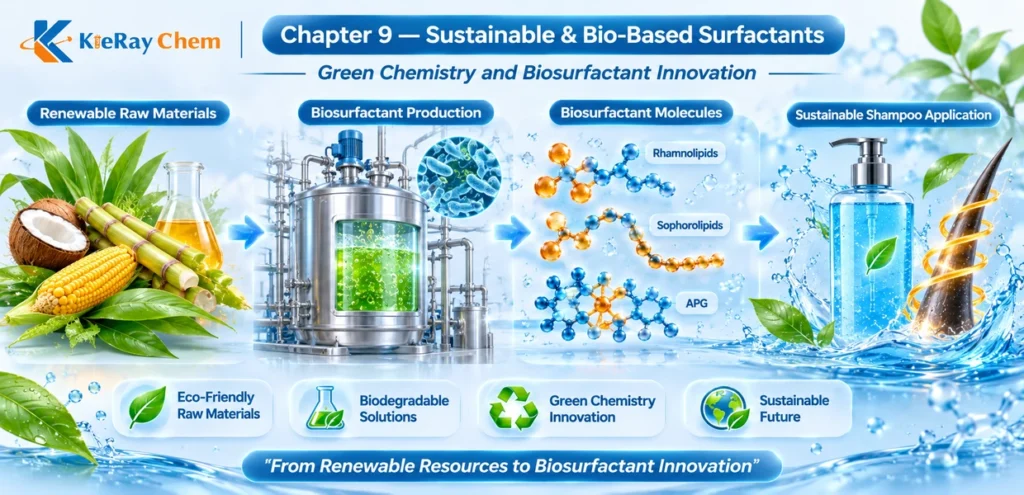
2.4 Emerging Biosurfactants
Biosurfactants are surface-active compounds produced through microbial fermentation or biological processes.
Important categories include:
| Biosurfactant | Representative molecular type | CAS Number | Formulation potential |
|---|---|---|---|
| Rhamnolipids | Glycolipid | 4348-58-3* (representative rhamnolipid) | Mild cleansing, emulsification and sustainable formulation |
| Sophorolipids | Glycolipid | 148409-20-5* (representative sophorolipid) | Surface activity, emulsification and cleansing |
| Mannosylerythritol Lipids (MELs) | Glycolipid | No single universal CAS | Interfacial modification and emulsification |
| Surfactin | Cyclic lipopeptide | 24730-31-2* | High interfacial activity and potential functional applications |
| Saponins | Plant-derived amphiphilic glycosides | Multiple CAS numbers | Natural-origin foaming and cleansing |
Emerging technical advantages:
- Potential use of renewable feedstocks.
- Biodegradability potential.
- Alternative interfacial activity profiles.
- Opportunities for lower-impact cleansing formulations.
Industrialization challenges:
- Fermentation yield and downstream purification.
- Batch-to-batch compositional consistency.
- Residual proteins, salts and fermentation by-products.
- Odor and color control.
- Compatibility with conventional surfactants and preservatives.
- Cost competitiveness and large-scale supply.
A particularly promising development strategy is to incorporate biosurfactants as partial replacements within hybrid surfactant systems rather than relying on complete substitution of conventional surfactants.
2.5 Surfactant Self-Assembly and Supramolecular Formulation
One emerging direction is the use of surfactant self-assembly to construct structured shampoo systems.
Surfactant molecules spontaneously organize into micelles, elongated or wormlike micelles, lamellar phases and other supramolecular structures depending on concentration, molecular geometry, temperature, pH and electrolyte content.
These structures can influence:
- Viscosity and shear-thinning behavior.
- Foam formation and stability.
- Deposition of conditioning ingredients.
- Suspension of insoluble materials.
- Physical stability during storage.
An emerging research approach uses amino-acid-derived surfactants, such as Sodium Cocoyl Glycinate, to develop supramolecular gel networks that can partially replace conventional synthetic rheology modifiers.
This approach creates opportunities for combining cleansing and structural functionality within the same surfactant architecture.
3. Scalp Microbiome and Next-Generation Scalp-Care Formulation
3.1 Scalp Microbiome Fundamentals
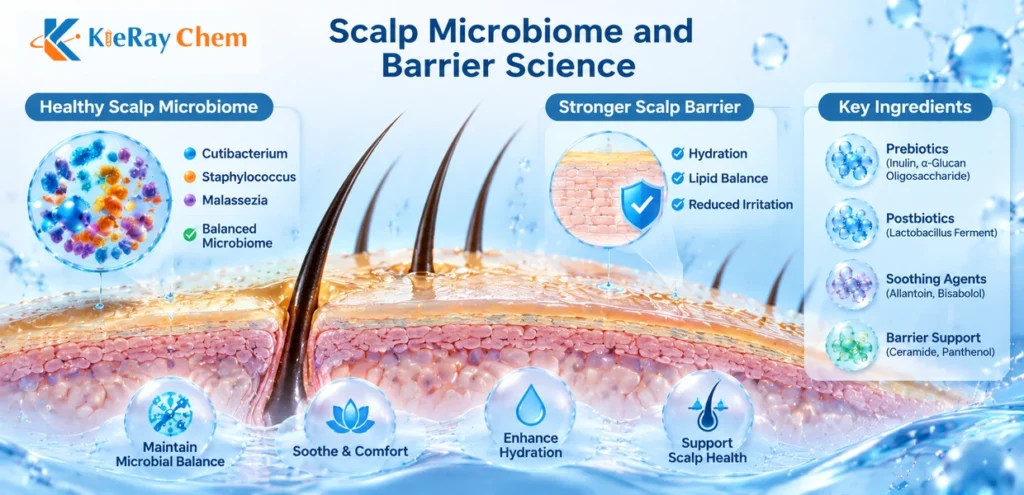
The scalp is a biologically active ecosystem containing microorganisms, sebum, sweat, keratinized cells and surface lipids.
Its microbial community includes bacteria and fungi, with commonly studied genera including:
- Cutibacterium
- Staphylococcus
- Malassezia
The composition and activity of these microorganisms interact with sebum production, scalp hydration, barrier condition and individual physiological characteristics.
Modern scalp-care formulations increasingly focus on maintaining a balanced scalp microenvironment rather than pursuing indiscriminate microbial elimination.
3.2 Microbiome-Oriented Ingredient Technologies
| Ingredient category | Representative INCI ingredients | CAS Number | Potential formulation functions |
|---|---|---|---|
| Prebiotics | Inulin | 9005-80-5 | Support beneficial microbial ecology |
| Prebiotics | Alpha-Glucan Oligosaccharide | 9005-80-5* / composition-dependent | Prebiotic-oriented scalp care |
| Postbiotics | Lactobacillus Ferment | No single universal CAS | Microbial-derived conditioning and scalp-care support |
| Postbiotics | Lactobacillus Ferment Lysate | No single universal CAS | Microbial-derived scalp-care support |
| Postbiotics | Saccharomyces Ferment | No single universal CAS | Fermentation-derived conditioning |
| Postbiotics | Bifida Ferment Lysate | No single universal CAS | Scalp-conditioning and skin-conditioning support |
| Humectants | Glycerin | 56-81-5 | Improve hydration |
| Humectants | Betaine | 107-43-7 | Osmolyte and moisturizing agent |
| Humectants | Panthenol | 81-13-0 / 16485-10-2* | Moisturizing and conditioning |
| Barrier-support ingredients | Ceramide NP | 100403-19-8* | Support surface lipid balance |
| Barrier-support ingredients | Cholesterol | 57-88-5 | Lipid-phase conditioning |
| Soothing ingredients | Allantoin | 97-59-6 | Improve scalp comfort |
| Soothing ingredients | Bisabolol | 23089-26-1 | Soothing and skin-conditioning support |
| Soothing ingredients | Dipotassium Glycyrrhizate | 68797-35-3 | Skin-conditioning and soothing support |
| Scalp-conditioning active | Niacinamide | 98-92-0 | Scalp conditioning and barrier-oriented formulation |
Important formulation considerations:
- Prebiotic ingredients should be evaluated for compatibility with preservatives and surfactant systems.
- Fermentation-derived materials require appropriate specifications for residual microorganisms, microbial contamination and compositional consistency.
- Microbiome-related claims require appropriate experimental substantiation.
- A change in microbial abundance does not automatically establish a beneficial clinical outcome.
3.3 Scalp Barrier and Surface Lipid Management
The scalp barrier is associated with the stratum corneum, intercellular lipids, natural moisturizing factors and surface lipid film.
Modern shampoo formulations can incorporate selected ingredients to improve the sensory and conditioning environment of the scalp.
Potential ingredients include:
- Ceramide NP and other suitable ceramide derivatives.
- Panthenol.
- Betaine.
- Glycerin.
- Niacinamide.
- Selected phospholipids and lipid dispersions.
Representative CAS references include:
| INCI name | CAS Number | Function |
|---|---|---|
| Ceramide NP | 100403-19-8* | Barrier-lipid-oriented conditioning |
| Hydrogenated Lecithin | 92128-87-5* | Phospholipid-based delivery and conditioning |
| Lecithin | 8002-43-5 | Emulsification and lipid conditioning |
| Cholesterol | 57-88-5 | Lipid-phase support |
| Squalane | 111-01-3 | Emolliency and lubrication |
| Hemisqualane (C13-15 Alkane) | Mixture; CAS depends on composition | Lightweight emolliency |
| Tocopherol | 59-02-9 | Antioxidant |
Because shampoos are rinse-off products, deposition, retention and rinse resistance are important determinants of actual ingredient performance.
4. Advanced Hair Conditioning and Repair Technologies
4.1 Hair-Fiber Structure and Damage Mechanisms
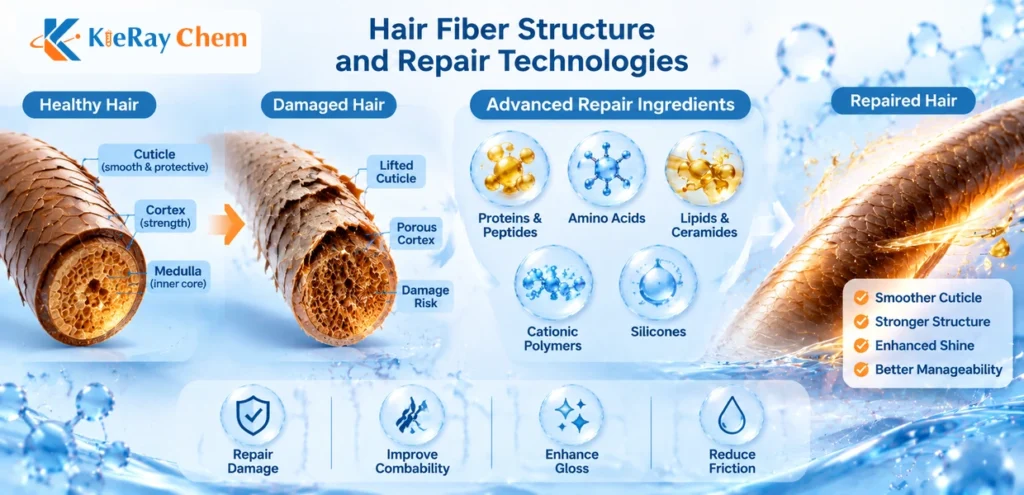
Hair fibers are primarily composed of keratin proteins and organized into three major structural regions:
- Cuticle: The external protective layer.
- Cortex: The main structural region responsible for mechanical properties.
- Medulla: The central region, which may be discontinuous or absent in fine hair.
Hair damage may result from:
- Oxidative bleaching and coloring.
- Alkaline chemical treatments.
- Thermal styling.
- UV exposure.
- Mechanical friction and repeated grooming.
- Environmental exposure.
These factors can disrupt the cuticle, modify protein interactions, alter surface hydrophobicity and increase hair-fiber porosity.
4.2 Cationic Polymer Conditioning Technology
Representative ingredients:
| INCI name | CAS Number | Main functionality |
|---|---|---|
| Guar Hydroxypropyltrimonium Chloride | 65497-29-2* | Wet-combing improvement and conditioning |
| Polyquaternium-7 | 26590-05-6 | Lubricity and antistatic performance |
| Polyquaternium-10 | 81859-24-7* | Film formation and combability |
| Polyquaternium-22 | 53694-17-0* | Conditioning and rheology modification |
| Polyquaternium-39 | 25136-75-8* | Film formation and conditioning |
Cationic polymers interact with negatively charged regions of damaged hair fibers through electrostatic attraction.
Their deposition can reduce surface friction, improve wet-combing properties and provide a smoother sensory profile.
4.3 Coacervation and Targeted Deposition Technology
Coacervation is an important mechanism in conditioning shampoo systems.
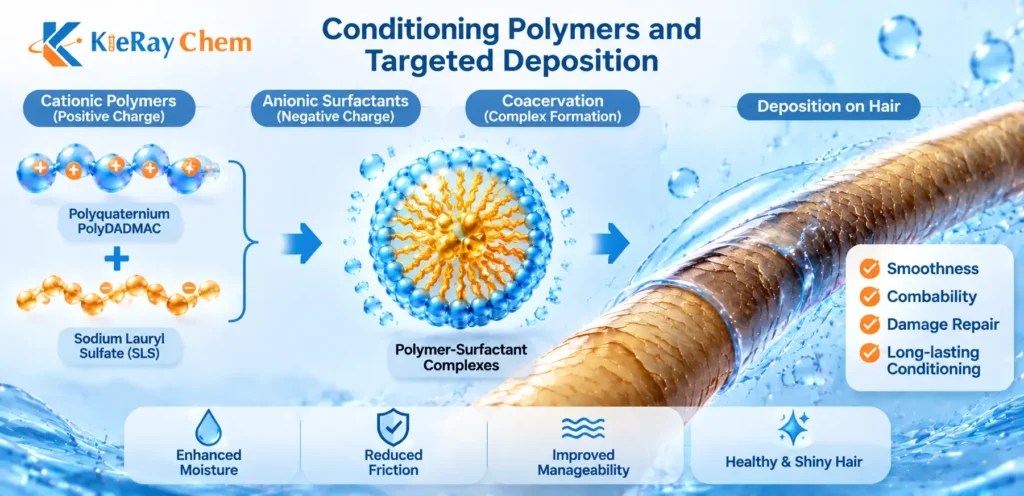
When anionic surfactants and cationic polymers are combined under suitable dilution, ionic strength and concentration conditions, they can form polymer-surfactant complexes or coacervates.
These structures may deposit conditioning ingredients onto hair during rinsing.
Key formulation parameters include:
- Polymer charge density.
- Polymer molecular weight.
- Anionic surfactant concentration.
- Polymer-to-surfactant ratio.
- Electrolyte concentration.
- pH.
- Dilution profile during rinsing.
Technical significance:
Coacervation enables conditioning ingredients to be deposited selectively and efficiently, potentially improving hair feel without requiring excessive conditioning-agent loading in the bulk formulation.
4.4 Silicone-Based Conditioning Technology
Representative ingredients:
| INCI name | CAS Number | Main functionality |
|---|---|---|
| Dimethicone | 9006-65-9 | Lubrication, gloss and friction reduction |
| Amodimethicone | 71750-79-3* | Substantive conditioning for damaged hair |
| Dimethiconol | 70131-67-8* | Film formation and softness |
| Silicone Quaternium-8 | Polymer-specific; verify supplier documentation | Cationic silicone conditioning |
Amodimethicone technology is particularly important for damaged-hair formulations.
Its amino-functional groups can promote interactions with negatively charged regions of damaged hair, supporting deposition and lubrication.
The formulation should optimize:
- Emulsion droplet size.
- Emulsion stability.
- Cationic character.
- Deposition efficiency.
- Compatibility with the surfactant system.
- Build-up potential after repeated use.
4.5 Protein, Peptide and Amino-Acid Repair Technologies
Representative ingredients:
| INCI name | CAS Number | Potential function |
|---|---|---|
| Hydrolyzed Keratin | Multiple CAS registrations; supplier-specific | Film formation and hair conditioning |
| Hydrolyzed Hair Keratin | Multiple CAS registrations; supplier-specific | Hair-fiber conditioning |
| Hydrolyzed Wheat Protein | 70084-87-6* / other registrations | Film formation and moisture management |
| Hydrolyzed Silk | 96690-41-4* / other registrations | Conditioning and smooth feel |
| Arginine | 74-79-3 | Amino-acid conditioning |
| Serine | 56-45-1 | Amino-acid conditioning |
| Glycine | 56-40-6 | Amino-acid conditioning |
| Cysteine | 52-90-4 | Sulfur-containing amino acid |
| Hydrolyzed Rice Protein | Supplier- and composition-dependent | Film formation and conditioning |
These ingredients may provide film formation, conditioning, moisture management and temporary surface reinforcement.
Their performance depends on molecular weight, charge distribution, solubility and affinity for the hair surface.
Emerging direction:
Biotechnology-derived peptides and engineered protein fragments are being investigated for more specific interactions with keratin structures.
However, shampoo rinse-off exposure limits the contact time available for deeper hair-fiber modification. Claims of permanent structural repair should therefore be distinguished from measurable improvements in surface conditioning and mechanical performance.
4.6 Bond-Building and Molecular Repair Technologies
Hair mechanical properties are associated with several types of interactions:
- Disulfide bonds.
- Hydrogen bonds.
- Ionic interactions.
- Hydrophobic interactions.
- Other covalent and non-covalent interactions within keratin structures.
Advanced hair-repair systems seek to protect or modify these interactions through selected reactive molecules, polymers, proteins and biomimetic technologies.
Potential development directions include:
- Disulfide-bond-oriented treatment technologies.
- Protein crosslinking and film-forming systems.
- Keratin-affinity peptides.
- Amino-acid-based conditioning complexes.
- Lipid replenishment systems.
For shampoo formulations, these technologies are often more appropriately implemented as part of a coordinated shampoo-conditioner-treatment system, rather than relying exclusively on the shampoo stage.
5. Advanced Functional Ingredients for Modern Shampoo Formulations
5.1 Moisturizing and Osmoprotective Ingredients
| INCI name | CAS Number | Main functionality |
|---|---|---|
| Glycerin | 56-81-5 | Humectancy |
| Betaine | 107-43-7 | Osmolyte and moisturizing agent |
| Panthenol | 81-13-0 / 16485-10-2* | Moisturizing and conditioning |
| Sodium PCA | 28874-51-3 | Natural moisturizing factor component |
| Ectoin | 96702-03-3 | Osmoprotective and hydration-supporting ingredient |
| Trehalose | 99-20-7 | Moisture management and protective formulation support |
| Hydroxyethyl Urea | 2078-71-9* | Humectancy and skin conditioning |
| Allantoin | 97-59-6 | Skin-conditioning and soothing support |
| Urea | 57-13-6 | Humectancy |
These ingredients are particularly relevant to scalp-oriented and moisturizing shampoo formulations.
Their concentration should be optimized to avoid excessive tackiness, residue or interference with viscosity and foam performance.
5.2 Sebum-Control and Scalp-Refreshing Ingredients
| INCI name | CAS Number | Main formulation role |
|---|---|---|
| Niacinamide | 98-92-0 | Scalp conditioning |
| Zinc PCA | 15454-75-8* | Zinc-containing scalp-care ingredient |
| Salicylic Acid | 69-72-7 | Keratolytic functionality |
| Menthol | 89-78-1 | Cooling sensory effect |
| Bisabolol | 23089-26-1 | Soothing and skin conditioning |
| Dipotassium Glycyrrhizate | 68797-35-3 | Soothing and skin conditioning |
| Panthenol | 81-13-0 / 16485-10-2* | Moisturizing and conditioning |
| Tocopherol | 59-02-9 | Antioxidant |
Their roles differ:
- Niacinamide is used in scalp-conditioning formulations.
- Zinc PCA combines zinc chemistry with a pyrrolidone carboxylate component.
- Salicylic Acid provides keratolytic functionality.
- Menthol primarily provides a cooling sensory effect.
A cooling sensation should not be interpreted as direct evidence of reduced sebum secretion.
5.3 Anti-Dandruff Active Technology
Anti-dandruff formulations require careful selection of active ingredients according to the regulatory framework of the target market.
| INCI name | CAS Number | Technical role |
|---|---|---|
| Piroctone Olamine | 68890-66-4 | Anti-dandruff active |
| Climbazole | 38083-17-9 | Anti-dandruff active |
| Zinc Pyrithione | 13463-41-7 | Anti-dandruff active; market-specific restrictions apply |
| Salicylic Acid | 69-72-7 | Exfoliating and keratolytic support |
Formulation considerations include:
- Active solubility and dispersion.
- pH compatibility.
- Crystallization and precipitation risk.
- Interaction with surfactants and conditioning polymers.
- Active deposition and rinse-off retention.
- Regulatory concentration limits and claim requirements.
Zinc Pyrithione is prohibited in cosmetic products in the European Union. Its status must be checked separately in each target market before product development or commercialization.
5.4 Lipid and Ceramide-Based Conditioning
Modern hair-conditioning formulations increasingly incorporate lipid-based technologies.
Representative materials:
| INCI name | CAS Number | Formulation purpose |
|---|---|---|
| Ceramide NP | 100403-19-8* | Lipid-oriented conditioning |
| Hydrogenated Lecithin | 92128-87-5* | Phospholipid-based conditioning |
| Lecithin | 8002-43-5 | Emulsification and lipid conditioning |
| Cholesterol | 57-88-5 | Lipid-phase support |
| Fatty alcohols | Multiple CAS numbers | Emolliency and structural support |
| Selected fatty acids | Multiple CAS numbers | Lipid-phase conditioning |
These materials can be incorporated through emulsions, lamellar dispersions or other suitable delivery structures.
Their formulation purpose is to improve surface conditioning, lubricity and lipid-related sensory performance.
5.5 Antioxidant and UV-Protection-Oriented Ingredients
Potential ingredients include:
| INCI name | CAS Number | Potential function |
|---|---|---|
| Tocopherol | 59-02-9 | Antioxidant |
| Ascorbic Acid | 50-81-7 | Antioxidant |
| Ferulic Acid | 1135-24-6 | Antioxidant |
| Caffeine | 58-08-2 | Scalp-care formulation active |
| Camellia Sinensis Leaf Extract | No single universal CAS | Botanical antioxidant ingredient |
| Rosmarinus Officinalis (Rosemary) Leaf Extract | No single universal CAS | Botanical antioxidant ingredient |
| Centella Asiatica Extract | No single universal CAS | Botanical skin-conditioning ingredient |
These ingredients may support oxidative-stress-oriented hair-care positioning.
Their use requires consideration of oxidation stability, solubility, discoloration, compatibility and actual deposition onto hair fibers.
6. Next-Generation Formulation Engineering
6.1 Lamellar and Liquid-Crystalline Structures
Lamellar liquid-crystalline structures are organized arrangements of surfactants, lipids and water.
They are widely relevant to conditioning emulsions and selected structured cleansing systems.
Potential benefits include:
- Improved physical structure.
- Controlled rheological behavior.
- Lipid incorporation.
- Conditioning-agent dispersion.
- Improved sensory characteristics.
However, not every shampoo benefits from a lamellar structure. Its suitability depends on the intended cleansing architecture and ingredient compatibility.
6.2 Polymer-Surfactant Complexation
Polymer-surfactant interactions are fundamental to modern shampoo design.
Important polymer categories include:
- Cationic conditioning polymers.
- Nonionic rheology modifiers.
- Anionic associative polymers.
- Amphoteric polymers.
- Biopolymer-based thickeners.
These materials can influence micelle growth, coacervation, viscosity, suspension and ingredient deposition.
Advanced formulation development should use phase diagrams and systematic concentration studies to establish optimal composition windows.
6.3 Advanced Rheology and Salt-Free Thickening
Traditional shampoo formulations often rely on Sodium Chloride to control viscosity.
However, salt thickening has limitations related to surfactant composition, temperature and electrolyte concentration.
Modern alternatives include:
| Thickener category | Representative INCI ingredients | CAS Number | Functional advantages |
|---|---|---|---|
| Cellulose derivatives | Hydroxyethylcellulose | 9004-62-0 | Broad rheology modification |
| Natural polysaccharides | Xanthan Gum | 11138-66-2 | Suspension and stabilization |
| Natural polysaccharides | Sclerotium Gum | 39464-87-4* | Suspension and stabilization |
| Acrylic polymers | Carbomer | 9003-01-4 | Strong viscosity-building potential |
| Cellulose derivatives | Hydroxypropyl Methylcellulose | 9004-65-3 | Rheology modification |
| Modified starches | Hydroxypropyl Starch Phosphate | 53124-00-8* | Thickening and stabilization |
| Pearlizing agents | Glycol Distearate | 627-83-8 | Pearlizing and viscosity contribution |
| Synthetic thickeners | PEG-150 Distearate | 9005-08-7* | Viscosity modification |
| Fatty-acid derivatives | Cocamide MEA | 68140-00-1* | Foam stabilization and thickening |
The development of salt-independent thickening systems is especially relevant to formulations containing sensitive actives, specialty surfactants and silicone emulsions.
6.4 Advanced Delivery Systems
Emerging delivery technologies include:
- Microemulsions.
- Nanoemulsions.
- Liposomes.
- Polymeric encapsulation.
- Biopolymer-based carriers.
- Stimuli-responsive delivery systems.
These technologies aim to improve the dispersion, stability, deposition or controlled release of functional ingredients.
For shampoo applications, their performance must be evaluated under actual dilution and rinsing conditions.
Small droplet size alone does not guarantee improved deposition, penetration or efficacy.
7. Sustainable and Green Shampoo Technologies
7.1 Bio-Based Surfactants
Sustainable surfactant development focuses on renewable feedstocks, production efficiency and environmental fate.
Important development directions include:
- Alkyl Polyglucosides.
- Amino-acid-derived surfactants.
- Rhamnolipids.
- Sophorolipids.
- Other fermentation-derived surfactants.
The sustainability assessment should consider feedstock origin, manufacturing energy, water consumption, biodegradation, toxicity and lifecycle impacts rather than relying solely on a natural-origin claim.
7.2 Silicone Alternatives and Biodegradable Conditioning Systems
Potential alternatives to conventional silicone systems include:
| INCI name | CAS Number | Formulation role |
|---|---|---|
| Squalane | 111-01-3 | Emolliency and lubrication |
| Hemisqualane / C13-15 Alkane | Composition-dependent | Lightweight emolliency |
| Hydrogenated Polyisobutene | 68937-10-0* | Emolliency and lubrication |
| Plant-derived emollient esters | Multiple CAS numbers | Conditioning and sensory modification |
| Biodegradable conditioning polymers | Polymer-specific | Film formation and conditioning |
| Cationic polysaccharides | Polymer-specific | Conditioning and deposition |
These ingredients cannot be considered direct functional equivalents to all silicone materials.
Formulation optimization should compare lubricity, combing force, deposition, wash-off behavior, residue and long-term performance.
7.3 Concentrated and Water-Efficient Shampoo Formats
Emerging product formats include:
- Solid shampoo bars.
- Concentrated liquid shampoo.
- Shampoo powders.
- Waterless cleansing concentrates.
- Refill and reduced-packaging systems.
These formats can reduce packaging and transportation burdens, although the overall environmental benefit depends on manufacturing, packaging, consumer usage and lifecycle performance.
8. Ingredient Selection and Formulation Reference Ranges
The following values are preliminary formulation-development ranges rather than universal commercial specifications. They refer to raw-material addition levels unless otherwise specified.
8.1 Primary and Secondary Surfactants
| Ingredient | Typical raw-material addition range | Application |
|---|---|---|
| Sodium Laureth Sulfate (SLES) | 20–45% | Conventional cleansing |
| Cocamidopropyl Betaine (CAPB) | 5–15% | Foam stabilization and mildness optimization |
| Sodium Lauroyl Sarcosinate | 5–15% | Mild cleansing |
| Sodium Cocoyl Glycinate | 5–20% | Mild cleansing |
| Sodium Methyl Cocoyl Taurate | 5–20% | Sulfate-free cleansing |
| Sodium Lauroyl Methyl Isethionate | 3–15% | Mild cleansing |
| Decyl Glucoside | 1–5% | Nonionic auxiliary cleansing |
| Rhamnolipid | Supplier- and system-dependent | Biosurfactant research and hybrid formulations |
Actual active matter must be calculated from the specification of each supplied raw material. The addition ranges above should not be interpreted as active-matter percentages.
8.2 Conditioning and Functional Ingredients
| Ingredient | Preliminary addition range | Primary function |
|---|---|---|
| Guar Hydroxypropyltrimonium Chloride | 0.1–0.5% | Wet-combing improvement |
| Polyquaternium-7 | 0.1–0.8% | Conditioning |
| Polyquaternium-10 | 0.1–0.5% | Film formation |
| Panthenol | 0.2–1.0% | Conditioning |
| Niacinamide | 0.1–2.0% | Scalp-conditioning formulation |
| Betaine | 0.5–3.0% | Osmolyte and humectant |
| Sodium PCA | 0.1–1.0% | Humectancy |
| Ectoin | 0.1–0.5% | Osmoprotection-oriented formulation |
| Hydrolyzed Protein | 0.1–1.0% | Hair conditioning |
| Ceramide-containing dispersion | Supplier-dependent | Lipid conditioning |
These ranges are starting points for screening, not efficacy thresholds or regulatory limits.
8.3 Functional Additives
| Ingredient | Typical formulation range | Function |
|---|---|---|
| Disodium EDTA | 0.05–0.20% | Chelation |
| Sodium Chloride | 0.2–2.5% | Viscosity modification |
| Citric Acid | q.s. | pH adjustment |
| Sodium Citrate | q.s. | Buffering |
| Preservative | According to regulatory and supplier specifications | Microbial protection |
| Fragrance | 0.1–0.6% as a preliminary screening range | Sensory modification |
Representative CAS references for common functional additives:
| INCI name | CAS Number | Function |
|---|---|---|
| Disodium EDTA | 139-33-3 | Chelation |
| Tetrasodium EDTA | 64-02-8 | Chelation |
| Trisodium EDTA | 150-38-9* | Chelation |
| Citric Acid | 77-92-9 | pH adjustment |
| Sodium Citrate | 68-04-2 | Buffering |
| Sodium Hydroxide | 1310-73-2 | pH adjustment |
| Potassium Hydroxide | 1310-58-3 | pH adjustment |
| Sodium Chloride | 7647-14-5 | Viscosity modification |
| Phenoxyethanol | 122-99-6 | Preservative |
| Sodium Benzoate | 532-32-1 | Preservative |
| Potassium Sorbate | 24634-61-5 | Preservative |
| Benzyl Alcohol | 100-51-6 | Preservative and solvent |
| Dehydroacetic Acid | 520-45-6 | Preservative |
| Chlorphenesin | 104-29-0 | Preservative |
| Caprylyl Glycol | 1117-86-8 | Preservative booster and humectant |
| Ethylhexylglycerin | 70445-33-9 | Preservative booster |
The final formulation must be evaluated for preservative efficacy, compatibility and stability.
9. Industrial Manufacturing and Process Optimization
9.1 Standard Manufacturing Workflow
- Raw-material inspection and weighing.
- Purified-water preparation.
- Chelating-agent and water-soluble ingredient dissolution.
- Polymer dispersion and hydration.
- Primary and secondary surfactant incorporation.
- Conditioning-agent and silicone-emulsion addition.
- Functional active incorporation.
- Viscosity adjustment.
- pH adjustment.
- Cooling and heat-sensitive ingredient addition.
- Deaeration and final homogenization, where appropriate.
- Quality inspection.
- Filtration and filling.
- Batch release and retain-sample management.
9.2 Critical Process Parameters
| Process parameter | Main technical concern |
|---|---|
| Mixing speed | Air entrainment and foam generation |
| Addition rate | Local concentration and polymer agglomeration |
| Processing temperature | Ingredient solubility and thermal stability |
| Hydration time | Polymer dispersion and viscosity development |
| Electrolyte addition | Micellar structure and viscosity |
| pH | Surfactant ionization and active stability |
| Homogenization | Emulsion droplet distribution |
| Cooling rate | Crystallization and phase stability |
A critical distinction is that excessive homogenization is not always beneficial. Some surfactant-polymer structures and preformed silicone emulsions may be destabilized by unsuitable shear conditions.
9.3 Quality Control and Product Validation
Finished-product evaluation should include:
Physicochemical testing
- Appearance and color.
- pH.
- Viscosity and rheology.
- Density.
- Surface tension, where relevant.
- Active matter and selected ingredient assays.
Stability testing
- Accelerated thermal storage.
- Low-temperature storage.
- Freeze-thaw cycling.
- Centrifugation.
- Long-term physical stability.
Performance testing
- Sebum-removal efficiency.
- Foam generation and stability.
- Wet-combing and dry-combing forces.
- Hair friction and tensile properties.
- Color retention, where relevant.
- Deposition of conditioning agents.
Microbiological and safety testing
- Microbial limits.
- Preservative efficacy testing.
- Finished-product safety assessment.
- Packaging compatibility.
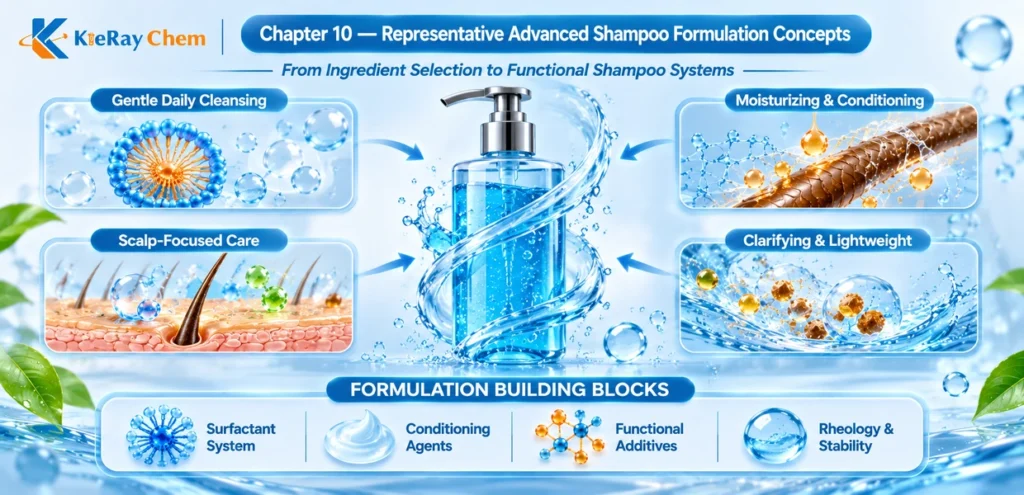
10. Representative Advanced Shampoo Formulation Concepts
The following concepts illustrate how modern ingredients can be integrated into different formulation architectures. They are development frameworks rather than validated finished formulas.
10.1 Mild Amino-Acid and Taurate Cleansing Shampoo
Formulation architecture:
- Primary surfactants: Sodium Cocoyl Glycinate and Sodium Methyl Cocoyl Taurate.
- Secondary surfactant: Cocamidopropyl Betaine.
- Nonionic auxiliary: Decyl Glucoside.
- Conditioning polymer: Polyquaternium-10.
- Humectants: Betaine and Panthenol.
- Chelating agent: Disodium EDTA.
- Rheology modifier: Compatible polymeric thickener.
Technical objectives:
- Reduce dependence on conventional sulfate surfactants.
- Maintain acceptable foam volume.
- Optimize scalp compatibility.
- Improve wet-combing performance.
- Establish stable viscosity without excessive electrolyte loading.
10.2 Microbiome-Oriented Scalp-Care Shampoo
Formulation architecture:
- Mild anionic-amphoteric surfactant blend.
- Prebiotic ingredient such as Inulin.
- Fermentation-derived ingredient with suitable microbiological specifications.
- Niacinamide.
- Panthenol.
- Betaine.
- Appropriate preservation and pH-control systems.
Technical objectives:
- Maintain cleansing efficiency.
- Support scalp hydration and comfort.
- Develop microbiome-oriented product positioning.
- Verify compatibility between fermentation-derived ingredients and preservation systems.
10.3 Advanced Damaged-Hair Repair Shampoo
Formulation architecture:
- Mild anionic and amphoteric surfactant blend.
- Amodimethicone emulsion.
- Polyquaternium-7 or Polyquaternium-10.
- Hydrolyzed Keratin or selected peptides.
- Panthenol.
- Selected lipid-conditioning ingredients.
Technical objectives:
- Improve cuticle-surface lubrication.
- Reduce wet-combing force.
- Reduce friction-related mechanical damage.
- Improve softness, gloss and manageability.
- Optimize silicone deposition without excessive buildup.
10.4 Sustainable Biosurfactant-Based Shampoo
Formulation architecture:
- Rhamnolipid or Sophorolipid.
- Selected amino-acid-derived surfactants.
- Cocamidopropyl Betaine or another compatible amphoteric surfactant.
- Biopolymer-based thickening system.
- Renewable-origin humectants.
- Appropriate biodegradable conditioning materials.
Technical objectives:
- Reduce reliance on conventional surfactant feedstocks.
- Improve environmental profile.
- Maintain sufficient foaming and cleansing performance.
- Address rheology, odor, color and cost challenges.
10.5 Supramolecular Gel Shampoo
Formulation architecture:
- Sodium Cocoyl Glycinate as a primary structural surfactant.
- Compatible amphoteric co-surfactant.
- Selected rheology modifiers.
- Conditioning agents.
- pH-control system.
Technical objectives:
- Use surfactant self-assembly to establish structured viscosity.
- Reduce reliance on conventional synthetic thickening polymers.
- Optimize pseudoplastic flow behavior.
- Improve formulation sustainability.
This technology remains an emerging research and development direction rather than a universal replacement for conventional shampoo manufacturing systems.
11. Future Development Trends in Shampoo Technology
The next generation of shampoo formulations is expected to develop along several interconnected technical pathways.
11.1 From Cleansing to Scalp Ecosystem Management
The product concept is evolving from simple sebum removal toward integrated management of scalp hydration, surface lipids, microbial ecology and comfort.
11.2 From Passive Conditioning to Targeted Deposition
Cationic polymer-surfactant complexation, coacervation and advanced emulsion technologies provide opportunities to improve the efficiency of conditioning-agent deposition.
11.3 From Conventional Conditioning to Molecular Hair Repair
Biotechnology-derived proteins, peptides, biomimetic materials and lipid-replenishment systems are expanding the functional possibilities of damaged-hair care.
11.4 From Synthetic Surfactants to Bio-Based Cleansing Systems
Fermentation-derived biosurfactants and renewable feedstocks offer potential pathways toward lower-impact personal-care formulations.
11.5 From Conventional Thickening to Supramolecular Rheology
Surfactant self-assembly, polymer-surfactant interactions and biopolymer networks are creating new opportunities for salt-independent and multifunctional rheology systems.
11.6 From Single-Product Development to Integrated Hair-Care Systems
Future product development increasingly considers shampoo, conditioner, scalp serum, hair mask and leave-on treatment as a coordinated formulation platform.
This approach allows cleansing, deposition, repair and scalp-care functions to be distributed across products according to their respective contact times and delivery characteristics.
12. Conclusion: An Integrated Framework for Advanced Shampoo Formulation
Modern shampoo development is no longer limited to selecting a primary surfactant and adjusting viscosity. It requires a multidisciplinary understanding of colloid chemistry, interfacial science, polymer science, hair-fiber structure, scalp biology, biotechnology and sustainable chemistry.
The key technical priorities can be summarized as follows:
- Surfactant engineering: Optimize molecular structure, active matter, mixed-micelle formation and cleansing performance.
- Scalp science: Integrate hydration, barrier-support and microbiome-oriented formulation strategies.
- Conditioning technology: Improve polymer deposition, coacervation and silicone-emulsion performance.
- Hair repair: Explore protein, peptide, lipid and biomimetic technologies with measurable performance endpoints.
- Rheology engineering: Develop stable, efficient and potentially salt-independent viscosity systems.
- Green chemistry: Improve renewable sourcing, biodegradability and lifecycle performance.
- Manufacturing science: Establish reproducible process parameters, product stability and batch-to-batch consistency.
Ultimately, the competitive advantage of an advanced shampoo is determined by the rational integration of surfactant chemistry, functional ingredients, deposition mechanisms, product safety and manufacturing performance—not by the concentration of any single highlighted ingredient.
13. Comprehensive Shampoo Ingredient Reference: INCI Names, CAS Numbers and Functional Applications
This section consolidates representative raw materials for shampoo formulation development. It is intended as a technical reference for ingredient screening, product research and raw-material database development.
13.1 Surfactants and Cleansing Ingredients
| Functional category | INCI name | CAS Number | Primary application |
|---|---|---|---|
| Anionic surfactant | Sodium Laureth Sulfate | 68891-38-3* | Primary cleansing and foaming |
| Anionic surfactant | Sodium Lauryl Sulfate | 151-21-3 | Strong cleansing |
| Anionic surfactant | Sodium Lauroyl Sarcosinate | 137-16-6 | Mild cleansing |
| Anionic surfactant | Sodium Cocoyl Glycinate | 90387-74-9* | Amino-acid-based cleansing |
| Anionic surfactant | Potassium Cocoyl Glycinate | 301341-58-2* | Mild cleansing |
| Anionic surfactant | Sodium Cocoyl Glutamate | 68187-32-6* | Mild cleansing |
| Anionic surfactant | Sodium Lauroyl Glutamate | 29923-31-7* | Mild cleansing |
| Anionic surfactant | Disodium Lauroyl Glutamate | 3397-65-7* | Mild cleansing |
| Anionic surfactant | Sodium Methyl Cocoyl Taurate | 12765-39-8* | Sulfate-free cleansing |
| Anionic surfactant | Sodium Lauroyl Methyl Isethionate | 928663-45-0* | Mild cleansing |
| Anionic surfactant | Sodium Cocoyl Isethionate | 61789-32-0* | Creamy foam and cleansing |
| Amphoteric surfactant | Cocamidopropyl Betaine | 61789-40-0* | Foam stabilization |
| Amphoteric surfactant | Coco-Betaine | 68424-94-2* | Mild cleansing |
| Amphoteric surfactant | Sodium Cocoamphoacetate | 68334-21-4* | Mild cleansing |
| Amphoteric surfactant | Disodium Cocoamphodiacetate | 68650-39-5* | Foam and mildness optimization |
| Amphoteric surfactant | Sodium Lauriminodipropionate | 14960-06-6* | Amphoteric cleansing |
| Nonionic surfactant | Decyl Glucoside | 54549-25-6* | Mild cleansing |
| Nonionic surfactant | Coco-Glucoside | 141464-42-8* | Cleansing and emulsification |
| Nonionic surfactant | Lauryl Glucoside | 110615-47-9* | Mild cleansing |
| Nonionic surfactant | Caprylyl/Capryl Glucoside | 68515-73-1* | Wetting and emulsification |
| Nonionic surfactant | PEG-7 Glyceryl Cocoate | 68201-46-7* | Refatting and conditioning |
13.2 Biosurfactants and Sustainable Cleansing Materials
| INCI / ingredient name | CAS Number | Application |
|---|---|---|
| Rhamnolipids | 4348-58-3* for a representative compound; mixtures vary | Fermentation-derived cleansing and emulsification |
| Sophorolipids | 148409-20-5* for a representative compound; mixtures vary | Biosurfactant cleansing |
| Mannosylerythritol Lipids (MELs) | No single universal CAS | Emulsification and interfacial modification |
| Surfactin | 24730-31-2* | Lipopeptide biosurfactant |
| Saponins | Multiple CAS numbers | Plant-derived foaming and cleansing |
13.3 Conditioning Polymers and Silicone Ingredients
| INCI name | CAS Number | Application |
|---|---|---|
| Guar Hydroxypropyltrimonium Chloride | 65497-29-2* | Cationic conditioning |
| Polyquaternium-7 | 26590-05-6 | Conditioning and antistatic performance |
| Polyquaternium-10 | 81859-24-7* | Film formation and combability |
| Polyquaternium-22 | 53694-17-0* | Conditioning and rheology modification |
| Polyquaternium-39 | 25136-75-8* | Conditioning and film formation |
| Dimethicone | 9006-65-9 | Lubrication and gloss |
| Amodimethicone | 71750-79-3* | Damaged-hair conditioning |
| Dimethiconol | 70131-67-8* | Film formation and softness |
| Silicone Quaternium-8 | Polymer-specific | Cationic silicone conditioning |
13.4 Proteins, Amino Acids and Hair-Repair Ingredients
| INCI name | CAS Number | Application |
|---|---|---|
| Hydrolyzed Keratin | Multiple registrations | Hair conditioning |
| Hydrolyzed Hair Keratin | Multiple registrations | Hair-fiber conditioning |
| Hydrolyzed Wheat Protein | 70084-87-6* and other registrations | Film formation and conditioning |
| Hydrolyzed Silk | 96690-41-4* and other registrations | Conditioning and smooth feel |
| Hydrolyzed Rice Protein | Supplier- and composition-dependent | Conditioning |
| Arginine | 74-79-3 | Amino-acid conditioning |
| Serine | 56-45-1 | Amino-acid conditioning |
| Glycine | 56-40-6 | Amino-acid conditioning |
| Cysteine | 52-90-4 | Sulfur-containing amino acid |
| Selected biomimetic peptides | Peptide-specific | Targeted hair-care research |
13.5 Moisturizing, Osmoprotective and Scalp-Care Ingredients
| INCI name | CAS Number | Application |
|---|---|---|
| Glycerin | 56-81-5 | Humectancy |
| Betaine | 107-43-7 | Osmolyte and moisturization |
| Panthenol | 81-13-0 / 16485-10-2* | Conditioning and moisturization |
| Sodium PCA | 28874-51-3 | Humectancy |
| Ectoin | 96702-03-3 | Osmoprotection |
| Trehalose | 99-20-7 | Moisture management |
| Hydroxyethyl Urea | 2078-71-9* | Humectancy |
| Allantoin | 97-59-6 | Soothing and conditioning |
| Urea | 57-13-6 | Humectancy |
| Niacinamide | 98-92-0 | Scalp conditioning |
| Zinc PCA | 15454-75-8* | Scalp-care formulations |
| Salicylic Acid | 69-72-7 | Keratolytic functionality |
| Menthol | 89-78-1 | Cooling sensation |
| Bisabolol | 23089-26-1 | Soothing |
| Dipotassium Glycyrrhizate | 68797-35-3 | Soothing and conditioning |
13.6 Anti-Dandruff and Lipid-Conditioning Ingredients
| INCI name | CAS Number | Application |
|---|---|---|
| Piroctone Olamine | 68890-66-4 | Anti-dandruff active |
| Climbazole | 38083-17-9 | Anti-dandruff active |
| Zinc Pyrithione | 13463-41-7 | Market-dependent anti-dandruff active |
| Ceramide NP | 100403-19-8* | Lipid-oriented conditioning |
| Hydrogenated Lecithin | 92128-87-5* | Phospholipid conditioning |
| Lecithin | 8002-43-5 | Emulsification and conditioning |
| Cholesterol | 57-88-5 | Lipid-phase support |
| Squalane | 111-01-3 | Emolliency |
| Hemisqualane / C13-15 Alkane | Composition-dependent | Lightweight emolliency |
| Tocopherol | 59-02-9 | Antioxidant |
13.7 Rheology Modifiers, Stabilizers and Chelating Agents
| INCI name | CAS Number | Application |
|---|---|---|
| Sodium Chloride | 7647-14-5 | Viscosity modification |
| Hydroxyethylcellulose | 9004-62-0 | Thickening |
| Xanthan Gum | 11138-66-2 | Suspension and stabilization |
| Sclerotium Gum | 39464-87-4* | Rheology modification |
| Carbomer | 9003-01-4 | Thickening |
| Hydroxypropyl Methylcellulose | 9004-65-3 | Thickening |
| Hydroxypropyl Starch Phosphate | 53124-00-8* | Thickening and stabilization |
| Glycol Distearate | 627-83-8 | Pearlizing |
| PEG-150 Distearate | 9005-08-7* | Thickening |
| Cocamide MEA | 68140-00-1* | Foam stabilization and thickening |
| Disodium EDTA | 139-33-3 | Chelation |
| Tetrasodium EDTA | 64-02-8 | Chelation |
| Citric Acid | 77-92-9 | pH adjustment |
| Sodium Citrate | 68-04-2 | Buffering |
| Sodium Hydroxide | 1310-73-2 | pH adjustment |
| Potassium Hydroxide | 1310-58-3 | pH adjustment |
13.8 Preservatives and Fragrance Components
| INCI name | CAS Number | Application |
|---|---|---|
| Phenoxyethanol | 122-99-6 | Preservation |
| Sodium Benzoate | 532-32-1 | Preservation |
| Potassium Sorbate | 24634-61-5 | Preservation |
| Benzyl Alcohol | 100-51-6 | Preservation and solvent |
| Dehydroacetic Acid | 520-45-6 | Preservation |
| Chlorphenesin | 104-29-0 | Preservation |
| Caprylyl Glycol | 1117-86-8 | Preservative booster |
| Ethylhexylglycerin | 70445-33-9 | Preservative booster |
| Linalool | 78-70-6 | Fragrance component |
| Limonene | 5989-27-5 | Fragrance component |
| Geraniol | 106-24-1 | Fragrance component |
| Citronellol | 106-22-9 | Fragrance component |
| Benzyl Salicylate | 118-58-1 | Fragrance component |
13.9 Botanical Extracts and Fermentation-Derived Ingredients
The following materials are commonly used in scalp-care and hair-care formulations. Their CAS identification should be based on the exact extract, fermentation material, solvent system and supplier specification.
| INCI name | CAS Number | Application |
|---|---|---|
| Camellia Sinensis Leaf Extract | No single universal CAS | Botanical antioxidant and scalp-care ingredient |
| Rosmarinus Officinalis (Rosemary) Leaf Extract | No single universal CAS | Botanical scalp-care ingredient |
| Centella Asiatica Extract | No single universal CAS | Skin-conditioning and soothing |
| Inulin | 9005-80-5 | Prebiotic-oriented formulation |
| Alpha-Glucan Oligosaccharide | Composition-dependent | Prebiotic-oriented formulation |
| Lactobacillus Ferment | No single universal CAS | Fermentation-derived scalp-care ingredient |
| Lactobacillus Ferment Lysate | No single universal CAS | Postbiotic-oriented scalp-care ingredient |
| Saccharomyces Ferment | No single universal CAS | Fermentation-derived conditioning |
| Bifida Ferment Lysate | No single universal CAS | Skin-conditioning and scalp-care support |
14. CAS Number Identification and Raw-Material Database Recommendations
For commercial raw-material sourcing, product registration and technical documentation, CAS numbers should be managed according to the following principles:
- Single chemical substances: Use the CAS number corresponding to the confirmed chemical identity, molecular structure and chemical form.
- Fatty-acid-derived surfactants: Commercial products may contain different fatty-chain distributions. Confirm the CAS number against the supplier’s SDS and raw-material specification.
- Polymers and cationic conditioning agents: CAS registrations may vary according to polymer composition, molecular-weight distribution and manufacturing process.
- Hydrolyzed proteins and peptides: Different hydrolysis processes and molecular-weight distributions may result in different registrations.
- Botanical extracts: Extracts should not automatically be assigned the CAS number of the original plant or a single constituent.
- Fermentation-derived ingredients: Fermentation broths, lysates and purified fermentation products may have different identities and registration records.
- Mixtures and proprietary dispersions: Use the CAS numbers of the declared components where applicable, rather than assigning a single unsupported CAS number to the entire commercial mixture.