English | 中文 | Español

Chemical Products

Quinalizarin 81 61 8 Structure

Quinalizarin

Quinalizarin (CAS 81-61-8; 1,2,5,8-tetrahydroxyanthracene-9,10-dione, also called 1,2,5,8-tetrahydroxyanthraquinone) is an anthraquinone compound with formula C14H8O6 and molar mass 272.21 g/mol. Its hydroxylated chromophore gives it color and metal-complexing behavior, supporting niche use in dye chemistry and as an analytical reagent or indicator. It is not highly water-soluble; supplier listings describe dissolution in polar organic solvents such

Quinalizarin Read More »

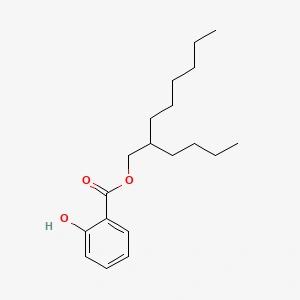
Butyloctyl Salicylate 190085 41 7 Structure

Butyloctyl Salicylate

Butyloctyl Salicylate (CAS 190085-41-7; INCI name: Butyloctyl Salicylate) is a synthetic, oil-soluble salicylate ester (C19H30O3; molecular weight 306.4 g/mol; EC 431-090-3).In cosmetics and personal-care formulations it is used principally as an emollient and formulation solvent; its presence in sun-care products does not make it a UV-filter active. The ingredient can contribute slip and spreadability, help

Butyloctyl Salicylate Read More »

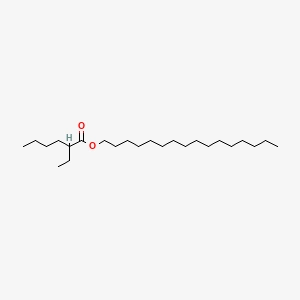
Hexadecyl 2 Ethylhexanoate 59130 69 7 Structure

Hexadecyl 2-Ethylhexanoate

Hexadecyl 2-ethylhexanoate (CAS 59130-69-7), also known as cetyl ethylhexanoate, is a long-chain branched fatty ester (C24H48O2; 368.64 g/mol). CAS-specific reference listings align this name, number, formula and molecular mass. The compound is principally described as an oil-soluble emollient and skin-conditioning ingredient for topical cosmetic formulations, not as a drug or therapeutic active. Its ester structure

Hexadecyl 2-Ethylhexanoate Read More »

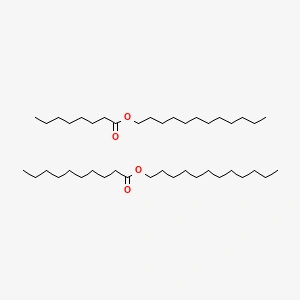
Cocoyl Caprylocaprate 95912 86 0 Structure

Cocoyl Caprylocaprate

Cocoyl caprylocaprate (CAS 95912-86-0), also described as fatty acids C8-10 C12-18-alkyl esters, is a variable-composition fatty-acid ester mixture rather than a single pure molecular species. A fixed molecular formula or molecular weight does not adequately describe the commercial material. It is used as an oil-phase emollient and skin-conditioning ingredient.

Cocoyl Caprylocaprate Read More »

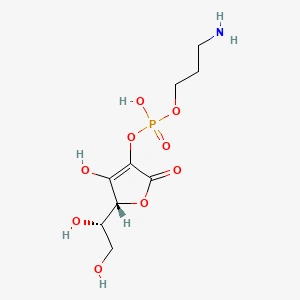
Aminopropyl Ascorbyl Phosphate 220644 17 7 Structure

Aminopropyl Ascorbyl Phosphate

Aminopropyl Ascorbyl Phosphate (AAP; also described as ascorbyl 3-aminopropyl hydrogen phosphate; CAS 220644-17-7) is a phosphorylated vitamin C derivative. The CAS-linked identity is consistent with the listed molecular formula C₉H₁₆NO₉P and molecular weight of 313.20 g/mol. This product is identified as cosmetic grade and supplied as a powder. It should be distinguished from unmodified ascorbic

Aminopropyl Ascorbyl Phosphate Read More »

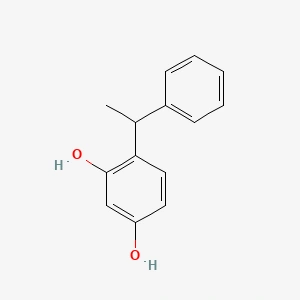
Phenylethyl Resorcinol 85 27 8 Structure

Phenylethyl Resorcinol

Phenylethyl Resorcinol (4-(1-phenylethyl)-1,3-benzenediol; SymWhite 377; CAS 85-27-8) is a synthetic cosmetic ingredient. The CAS number, name, formula (C14H14O2), and molecular weight (214.26 g/mol) are consistent with the supplied product record. The material is described there as a white to off-white powder of cosmetic grade (≥99% assay). Its principal cosmetic use is in topical formulations intended

Phenylethyl Resorcinol Read More »

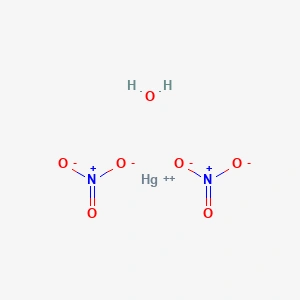
Mercury II Nitrate Monohydrate 7783 34 8 Structure

Mercury(II) Nitrate Monohydrate

Mercury(II) nitrate monohydrate (mercuric nitrate monohydrate; CAS 7783-34-8) is the monohydrate of mercury(II) nitrate, a highly toxic inorganic mercury salt. Its formula is H₂HgN₂O₇ [Hg(NO₃)₂·H₂O] and its molecular weight is 342.62 g/mol. The CAS-linked identity is consistent with the listed product name. It supplies mercury(II) ions for specialized analytical work and controlled chemical research, not

Mercury(II) Nitrate Monohydrate Read More »

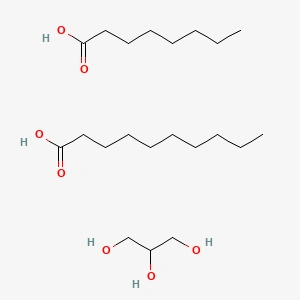
Glyceryl Caprylate Caprate 65381 09 1 Structure

Glyceryl Caprylate Caprate

Glyceryl caprylate caprate (CAS 65381-09-1), also known as caprylic/capric triglyceride, is a mixture of glycerol triesters of caprylic (C8) and capric (C10) fatty acids. A representative triester formula is C₂₁H₄₀O₅ (MW 372.54); the commercial material is a variable mixture, so a single formula does not fully describe every grade. It is a lightweight, low-odor emollient

Glyceryl Caprylate Caprate Read More »

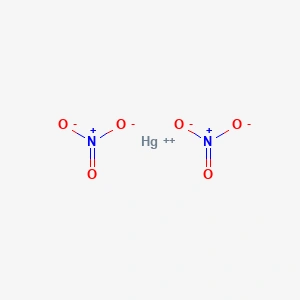
Mercury II Nitrate 10045 94 0 Structure

Mercury(II) Nitrate

Mercury(II) nitrate (mercuric nitrate; CAS 10045-94-0) is an inorganic mercury(II) salt used as a soluble Hg(II) reagent in specialized laboratory chemistry. Its relevance is limited to method-specific analytical work and selected synthesis that explicitly requires this reagent. It is a highly toxic mercury compound and nitrate oxidizer, with serious exposure and environmental-contamination hazards. It is

Mercury(II) Nitrate Read More »

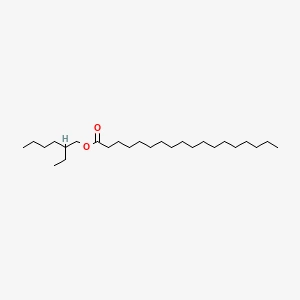
Ethylhexyl Stearate 22047 49 0 Structure

Ethylhexyl Stearate

Ethylhexyl Stearate (CAS 22047-49-0), also called 2-ethylhexyl stearate or 2-ethylhexyl octadecanoate, is the ester of stearic acid and 2-ethylhexanol. Its long-chain fatty-acid and branched alkyl groups make it an oil-soluble, water-insoluble liquid suited to the oil phase of personal-care formulations. Its principal formulation roles are emolliency, lubrication, and improved spreadability or slip, contributing a smoother,

Ethylhexyl Stearate Read More »

Glucosylglycerol 22160 26 5 Structure

Glucosylglycerol

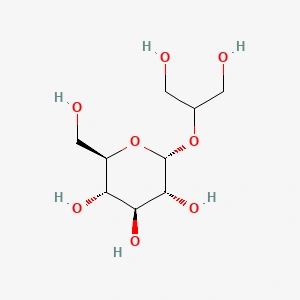
Glucosylglycerol (CAS 22160-26-5), also called glyceryl glucoside or 2-O-α-D-glucosylglycerol, is a glucose–glycerol glycoside (C9H18O8; approximately 254.24 g/mol). Its relevant formulation context includes use as a moisture-supporting ingredient in personal-care products and investigation or use as an osmolyte/protective solute in biochemical applications such as protein stabilization. These are ingredient and research/application contexts, not evidence of an

Glucosylglycerol Read More »

Oxytocin 50 56 6 Structure

Oxytocin

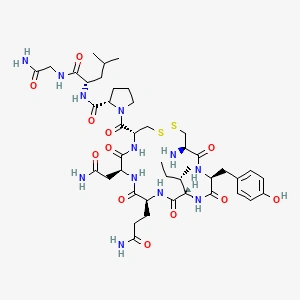
Oxytocin (CAS 50-56-6) is a naturally occurring cyclic nonapeptide hormone; the CAS identity aligns with its name, formula C43H66N12O12S2, and molecular weight of 1007.19 g/mol. Its sequence is Cys-Tyr-Ile-Gln-Asn-Cys-Pro-Leu-Gly-NH2, with a disulfide bridge between cysteine residues. Synthesized in hypothalamic neurons and released from the posterior pituitary, oxytocin binds specific oxytocin receptors, including receptors on uterine

Oxytocin Read More »

Tetrahexyldecyl Ascorbate 183476 82 6 Structure

Tetrahexyldecyl Ascorbate

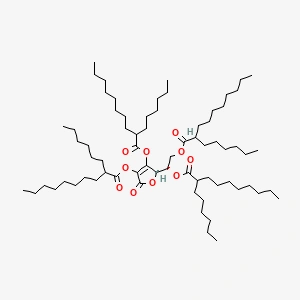
Tetrahexyldecyl ascorbate is an advanced, highly stable, and lipid-soluble ester derivative of L-ascorbic acid. By attaching multiple hexyldecanol chains to the ascorbic core, this molecule achieves exceptional stability against oxidation and heat, overcoming the rapid degradation typical of traditional water-soluble ascorbic acid. Its pronounced lipophilic nature grants it a high affinity for the skin’s natural

Tetrahexyldecyl Ascorbate Read More »

Potassium Cetyl Phosphate 19035 79 1 Structure

Potassium Cetyl Phosphate

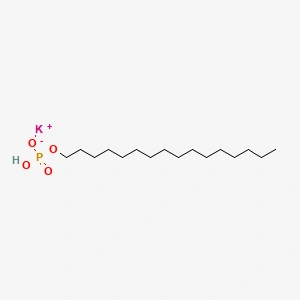
Potassium Cetyl Phosphate (CAS 19035-79-1), also called cetyl phosphate potassium salt, is an anionic surfactant and emulsifying ingredient. Its hydrophobic cetyl (C16) chain and phosphate-containing, potassium-associated head group give it amphiphilic character. Its principal reported role is oil-in-water emulsification in personal-care formulations, where it helps disperse oil and water phases and contributes to emulsion texture

Potassium Cetyl Phosphate Read More »

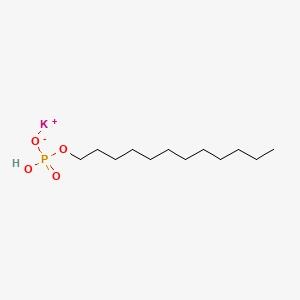
Potassium Lauryl Phosphate 39322 78 6 Structure

Potassium Lauryl Phosphate

Potassium lauryl phosphate is an anionic surfactant and organophosphate salt. Recognized for its gentle cleansing, excellent emulsification, and foaming properties, this chemical auxiliary is widely utilized in personal care formulations such as shampoos, body washes, and facial cleansers. Beyond cosmetic applications, it serves as a functional wetting agent and detergent booster in specialized household cleaners,

Potassium Lauryl Phosphate Read More »

REQUEST A QUOTE

Product Inquiry — Popup Form