English | 中文 | Español

Chemical Products

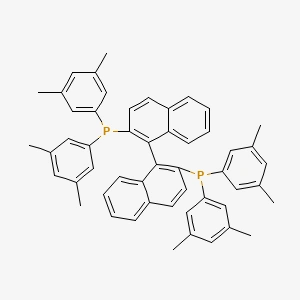
(R)-XylBINAP

(R)-XylBINAP (CAS: 137219-86-4) is the (R) enantiomer of the bulky, electron-rich chiral bisphosphine ligand XylBINAP, supplied as a white to pale yellow crystalline powder. The binaphthyl backbone fixes the two bis(3,5-dimethylphenyl)phosphino groups in a rigid chiral arrangement that transfers asymmetry efficiently to a coordinated metal, so it complements the (S) isomer by giving access to
(R)-XylBINAP Read More »

Platinum(IV) Oxide

Platinum(IV) Oxide (CAS: 1314-15-4), best known as Adams’ catalyst, is a brown to black platinum oxide powder with a high platinum content and excellent hydrogenation activity. Unlike platinum black it stores and handles more conveniently, and it forms the active hydrogenation catalyst in situ when reduced by hydrogen during a reaction. This makes it a

Platinum(IV) Oxide Read More »

Montmorillonite

Montmorillonite (CAS 1318-93-0) is a naturally occurring layered aluminosilicate clay of the smectite group. Its structure allows water and cations to enter between the silicate layers, so the clay swells, thickens liquids and exchanges ions. As a natural mineral its exact composition varies with source; specifications are based on moisture, particle size, cation-exchange capacity and

Montmorillonite Read More »

1,3-Dihydroxynaphthalene

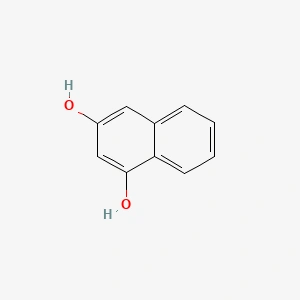
1,3-Dihydroxynaphthalene (CAS: 132-86-5), also called naphthoresorcinol, is a white to off-white crystalline dihydroxy naphthalene with two phenolic groups positioned on the same ring. The diol is readily oxidised and coupled, so it is a valuable intermediate for dyes, pigments, photographic chemicals and antioxidants, and it works as a chromogenic reagent that gives coloured products with

1,3-Dihydroxynaphthalene Read More »

Palladium(II) Bromide

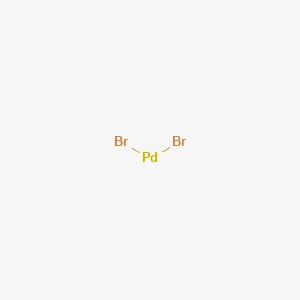
Palladium(II) Bromide (CAS: 13444-94-5) is a brown, crystalline palladium halide that is practically insoluble in water and only sparingly soluble in common organic solvents. It is a defined, high-purity palladium source used when a bromide route is required, for example in the preparation of palladium catalysts where residual chloride must be avoided, in bromide-mediated coupling

Palladium(II) Bromide Read More »

Platinum(IV) Chloride

Platinum(IV) Chloride (CAS: 13454-96-1) is a red-brown to dark brown crystalline platinum salt that is soluble in water and in some polar organic solvents, forming acidic solutions. As a platinum(IV) compound it is easy to reduce to platinum metal or to platinum(II) species, so it serves as a flexible precursor for catalysts, platinum complexes and

Platinum(IV) Chloride Read More »

Thymolphthalein

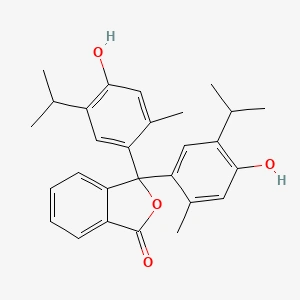
Thymolphthalein (CAS: 125-20-2) is a white to off-white crystalline phthalein dye that behaves as a pH indicator, changing from colourless in acidic and neutral media to blue in alkaline solution over the pH 9.3–10.5 range. Because the transition sits above the range of most common indicators, it is particularly useful for titrations of weak bases,

Thymolphthalein Read More »

Palladium(II) Oxide

Palladium(II) Oxide (CAS: 1314-08-5) is a black to dark green palladium oxide powder supplied at ≥99% purity with a high, reproducible palladium content. It is a well-defined source of palladium for catalyst manufacture and can be reduced to finely divided palladium metal, which makes it valuable where a specific metal dispersion or a controlled reduction

Palladium(II) Oxide Read More »

Palladium Hydroxide

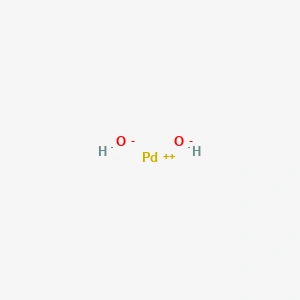
Palladium Hydroxide (CAS: 12135-22-7) is a black palladium(II) compound supplied as a high-purity powder with a well-defined metal content. When deposited on carbon it forms the classic Pearlman’s catalyst, which is prized for debenzylation, hydrogenolysis of protecting groups and selective hydrogenation because the hydroxide phase is less aggressive than metallic palladium and gives cleaner selectivity.

Palladium Hydroxide Read More »

4-Hydroxydiphenylamine

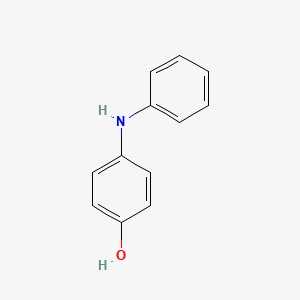
4-Hydroxydiphenylamine (CAS: 122-37-2) is a white to greyish crystalline aromatic amine that combines a phenolic hydroxyl with a secondary diaryl amine. Both groups can be oxidised or coupled, so the compound is an effective antioxidant and polymerisation inhibitor, and it is a widely used intermediate for rubber antioxidants, dyes and photographic chemicals. It also serves

4-Hydroxydiphenylamine Read More »

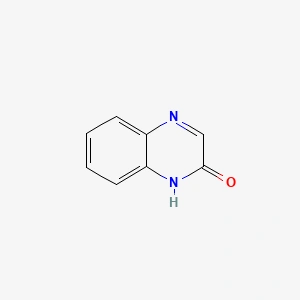
2-Quinoxalinol

2-Quinoxalinol (CAS: 1196-57-2) is a white to off-white crystalline nitrogen heterocycle that exists mainly in its lactam tautomeric form and behaves as a weak acid. The quinoxalinone core is a privileged scaffold in medicinal chemistry, appearing in antimicrobial, antiviral, anticancer and CNS-active compounds, so the compound is produced as a defined intermediate for drug and

2-Quinoxalinol Read More »

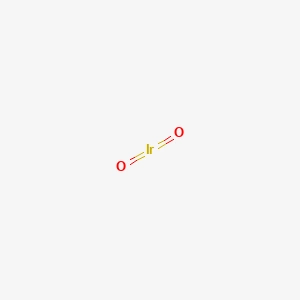
Iridium(IV) Oxide

Iridium(IV) Oxide (CAS: 12030-49-8) is a black, high-purity iridium dioxide powder that combines excellent electrical conductivity with outstanding chemical and electrochemical stability. These properties make it a benchmark material for oxygen-evolution and chlorine-evolution electrodes, where it resists corrosion in aggressive acidic media far better than most alternatives. It is also used as a catalyst, as

Iridium(IV) Oxide Read More »

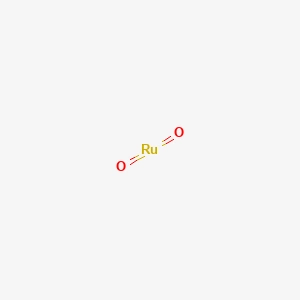
Ruthenium Dioxide

Ruthenium Dioxide (CAS: 12036-10-1) is a black, anhydrous ruthenium oxide powder with metallic-type conductivity and very good chemical resistance. It is used as the conductive and catalytic phase in resistor pastes, thick-film electronic components and electrode coatings, and as a chlorine- or oxygen-evolution catalyst in electrochemical cells. Its high specific capacitance also makes it a

Ruthenium Dioxide Read More »

Rhodium(III) Oxide

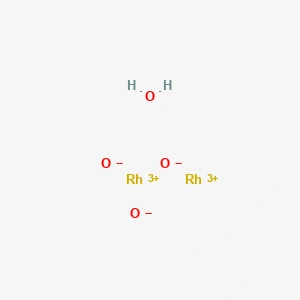
Rhodium(III) Oxide (CAS: 12036-35-0) is an anhydrous, grey to black rhodium oxide powder supplied at high purity with a consistent rhodium content. It is insoluble in ordinary solvents but is readily reduced or dissolved for further processing, which makes it a practical intermediate for catalyst manufacture and for preparing rhodium metal and rhodium salts. In

Rhodium(III) Oxide Read More »

REQUEST A QUOTE

Product Inquiry — Popup Form