English | 中文 | Español

Chemical Products

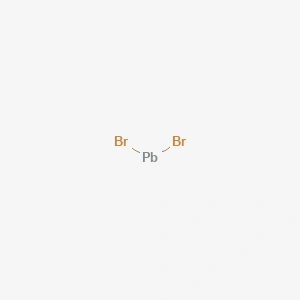
Lead(II) Bromide

Lead(II) Bromide (CAS: 10031-22-8) is a white crystalline lead halide that is only sparingly soluble in cold water but dissolves well in hot water and in bromide solutions. This solubility behaviour makes it easy to recrystallise and to obtain as a high-purity, well-defined salt. Its main commercial role today is as a lead and bromide
Lead(II) Bromide Read More »

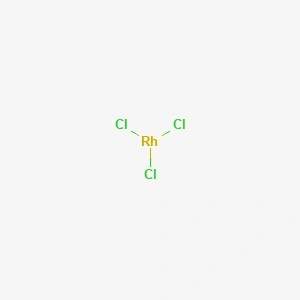
Rhodium(III) Chloride

Rhodium(III) Chloride (CAS: 10049-07-7) is the anhydrous form of rhodium trichloride, a red-brown crystalline powder with a high and consistent rhodium content. It is the standard precursor for making rhodium catalysts and rhodium complexes, including Wilkinson-type catalysts, phosphine complexes and supported hydrogenation catalysts, and it is also used to prepare rhodium plating baths and rhodium-containing

Rhodium(III) Chloride Read More »

Rhodium(III) Nitrate

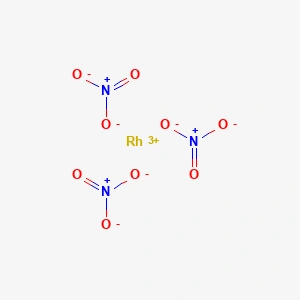
Rhodium(III) Nitrate (CAS: 10139-58-9) is supplied as a dark red-brown aqueous solution, most commonly standardised at 10% rhodium, containing a small amount of free nitric acid for stability. The nitrate route is valued because it leaves no chloride behind, which matters in catalysts and electronic materials where residual halide can poison performance or corrode substrates.

Rhodium(III) Nitrate Read More »

Grubbs Catalyst M310

Grubbs Catalyst M310 (CAS 1031262-76-6) is a ruthenium metathesis catalyst in which an N-heterocyclic carbene, an indenylidene fragment and a labile pyridine ligand surround the ruthenium centre. The bulky NHC ligand supplies high activity and functional-group tolerance, while the weakly bound pyridine leaves easily to open the active site.

Grubbs Catalyst M310 Read More »

Tetrahydrothiopyran-4-One

Tetrahydrothiopyran-4-One (CAS: 1072-72-6) is a colourless to pale yellow sulfur-containing cyclic ketone that serves as a versatile synthetic building block. The ketone reacts with amines, hydrazines and organometallics in the usual way, while the ring sulfur can be oxidised to sulfoxide or sulfone and can coordinate to metals, so a single starting material gives access

Tetrahydrothiopyran-4-One Read More »

Luminol

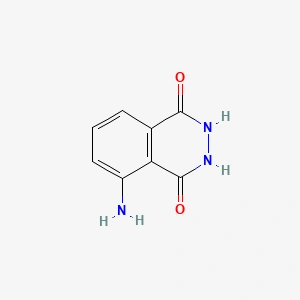
Luminol (CAS: 521-31-3) is a white to pale brown crystalline heterocyclic compound famous for its bright blue chemiluminescence when it is oxidised in alkaline solution. Its light emission is triggered by oxidants such as hydrogen peroxide in the presence of a metal catalyst, which makes it possible to detect very small amounts of metal ions,

Luminol Read More »

Dimercaprol

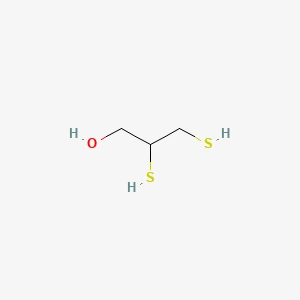
Dimercaprol (CAS: 59-52-9) is a colourless to pale yellow oily liquid with a strong mercaptan odour, built around a two-carbon chain carrying two thiol groups and a terminal hydroxyl. Those adjacent thiols bind strongly to heavy-metal ions, so the compound works as a chelating antidote that helps the body excrete arsenic, mercury, gold and lead.

Dimercaprol Read More »

Tetrabutylphosphonium Chloride

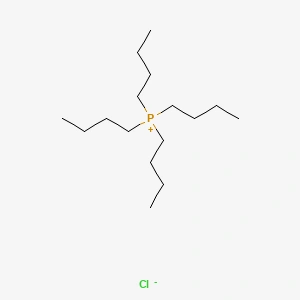
Tetrabutylphosphonium Chloride (CAS: 2304-30-5) is a white to off-white quaternary phosphonium salt with a large, symmetric organic cation. The bulky cation gives the salt good thermal stability, low volatility and solubility in both water and polar organic solvents, which is why it is a standard starting material for ionic liquids and phase-transfer catalysts. It is

Tetrabutylphosphonium Chloride Read More »

Chromium(III) Chloride

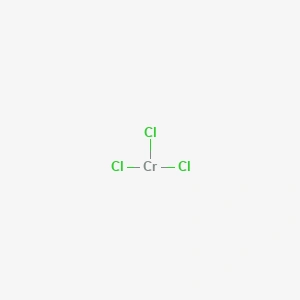
Chromium(III) Chloride (CAS: 10025-73-7) is the anhydrous form of chromium trichloride, a violet to dark green crystalline solid. It is an important industrial and laboratory chromium source: it works as a mild Lewis acid catalyst, as a precursor for organochromium reagents such as Nozaki–Hiyama reagents, and as the active component in chromium electroplating and surface-treatment

Chromium(III) Chloride Read More »

Iridium Tetrachloride

Iridium Tetrachloride (CAS: 10025-97-5) is a dark brown to black crystalline iridium(IV) halide supplied at ≥98% purity. It is a defined, high-purity iridium source used to prepare iridium coordination compounds, iridium oxide electrode materials and heterogeneous catalysts. Because iridium is expensive, working with a well-characterised salt that has a known metal content makes charge calculation

Iridium Tetrachloride Read More »

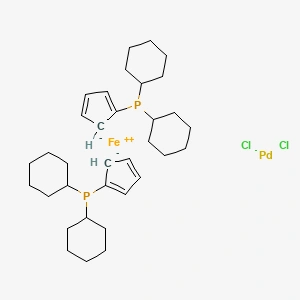
Bis(dicyclohexylphosphino)ferrocene Palladium(II) Dichloride

Bis(dicyclohexylphosphino)ferrocene Palladium(II) Dichloride (CAS: 917511-90-1) is an air-stable, pre-formed palladium catalyst built on a bulky, electron-rich ferrocenyl bisphosphine ligand. The ligand accelerates reductive elimination, so couplings of hindered or functionalised substrates proceed at low catalyst loading, and the resulting complexes are unusually robust for a Pd(II) system. It is supplied as a yellow to orange

Bis(dicyclohexylphosphino)ferrocene Palladium(II) Dichloride Read More »

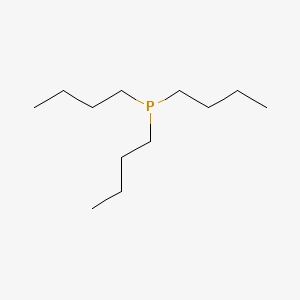
Tributylphosphine

Tributylphosphine (CAS: 998-40-3) is a colourless to pale yellow tertiary phosphine liquid with a characteristic, unpleasant odour. The three butyl groups make it strongly lipophilic and electron-rich, so it is both a good ligand for transition metals and a mild, selective reducing agent. In practice it is used to reduce azides and ozonides, to convert

Tributylphosphine Read More »

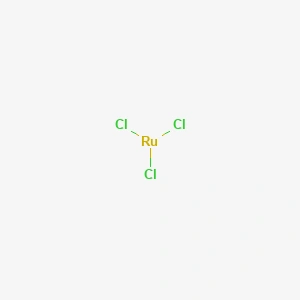
Ruthenium(III) Chloride

Ruthenium(III) Chloride (CAS: 10049-08-8) is the anhydrous form of ruthenium trichloride, supplied as a dark brown to black crystalline powder. Unlike the hydrated grades, it is essentially free of water and is preferred where a moisture-free ruthenium source is required, for example in non-aqueous catalyst preparation or when the water content of a reaction must

Ruthenium(III) Chloride Read More »

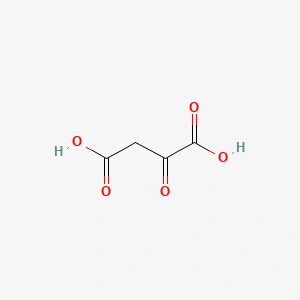
Oxaloacetic Acid

Oxaloacetic Acid (CAS: 328-42-7) is a white to off-white crystalline keto acid that sits at the centre of many biochemical pathways, including the citric acid cycle, gluconeogenesis and amino-acid metabolism. The molecule combines a ketone group with two carboxylic acids, giving it strong metal-chelating ability and high reactivity in condensation and transamination reactions. It is

Oxaloacetic Acid Read More »

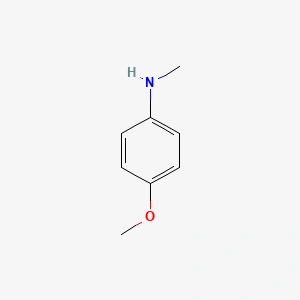
N-Methyl-4-Anisidine

N-Methyl-4-Anisidine (CAS: 5961-59-1) is a colourless to pale yellow liquid aniline derivative that carries both a secondary amine and a methoxy substituent on the aromatic ring. The amine is easily acylated, alkylated or diazotised, while the methoxy group activates the ring towards electrophilic substitution, so the molecule is a flexible intermediate for dyes, pigments, pharmaceuticals

N-Methyl-4-Anisidine Read More »

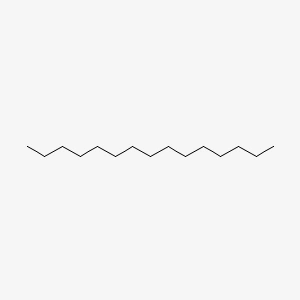
Pentadecane

Pentadecane (CAS: 629-62-9) is a straight-chain C15 alkane supplied as a clear, colourless liquid with a very low odour and excellent chemical stability. As a saturated hydrocarbon it is non-polar, non-reactive and compatible with most organic systems, which makes it useful as a solvent, diluent and carrier. It is also a common reference standard for

Pentadecane Read More »

REQUEST A QUOTE

Product Inquiry — Popup Form