English | 中文 | Español

Chemical Products

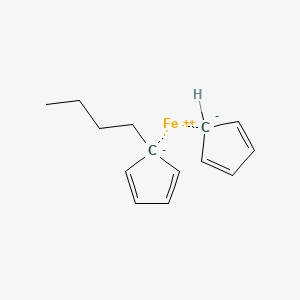
Butylferrocene 31904 29 7 Structure

Butylferrocene

Butylferrocene is an iron sandwich compound in which one cyclopentadienyl ring carries an n-butyl substituent, supplied as an orange to brown clear liquid at 98% purity. The ferrocene core provides a reversible one-electron redox couple, thermal stability and a lipophilic, low-toxicity organometallic skeleton, while the butyl chain improves solubility in hydrocarbons and polymers. These properties
Butylferrocene Read More »

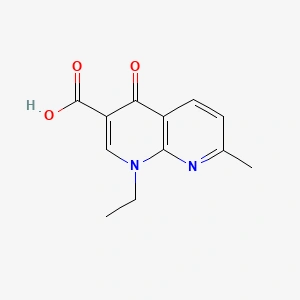
Nalidixic Acid 389 08 2 Structure

Nalidixic Acid

Nalidixic Acid (CAS: 389-08-2) is a synthetic quinolone-class antibacterial compound and the first of the quinolone family. It acts by inhibiting bacterial DNA gyrase. It appears as a white to pale yellow crystalline powder, sparingly soluble in water and soluble in alkaline solutions and some organic solvents. Today it is used mainly as a pharmaceutical

Nalidixic Acid Read More »

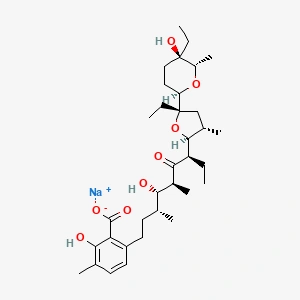
LasalocidSodium 25999 20 6 Structure

Lasalocid Sodium

Lasalocid sodium is the sodium salt of a polyether carboxylic acid ionophore produced by fermentation, supplied as an off-white to pale yellow powder at 90% assay. The molecule wraps around monovalent and divalent cations and shuttles them across lipid membranes, which disturbs the ion balance of sensitive microorganisms and improves nutrient utilisation in the animal

Lasalocid Sodium Read More »

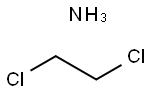
Polyamine N7 29320 38 5 Structure

Polyamine N7

Polyamine N7 is a water-soluble cationic polyamine obtained by copolymerisation of ammonia with 1,2-dichloroethane, normally supplied as a 50% aqueous solution. The polymer has a distribution of chain lengths; the repeat unit is commonly represented as (C₂H₄Cl₂·H₃N)x. Protonated amine groups adsorb strongly onto negatively charged surfaces.

Polyamine N7 Read More »

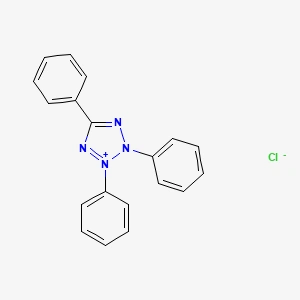
TriphenyltetrazoliumChloride 298 96 4 Structure

Triphenyltetrazolium Chloride

Triphenyltetrazolium chloride is a water-soluble tetrazolium salt, supplied as a white to pale yellow crystalline powder at 98% purity. In living tissues the colourless salt is reduced by dehydrogenase activity to formazan, an intensely red, water-insoluble pigment, so the intensity of the colour reports directly on metabolic activity and cell viability. This simple, robust chemistry

Triphenyltetrazolium Chloride Read More »

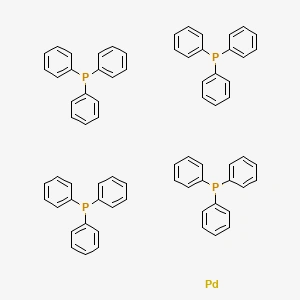
Tetrakistriphenylphosphinepalladium0 14221 01 3 Structure

Tetrakis(triphenylphosphine)palladium(0)

Tetrakis(triphenylphosphine)palladium(0) (CAS: 14221-01-3) is a ready-to-use zero-valent palladium complex and one of the most widely applied catalysts for carbon-carbon and carbon-heteroatom bond formation. As a pre-formed palladium(0) source it initiates reactions without an activation step, giving dependable performance in Suzuki, Stille, Sonogashira, Heck and Negishi couplings. The yellow crystalline solid is sensitive to air, light

Tetrakis(triphenylphosphine)palladium(0) Read More »

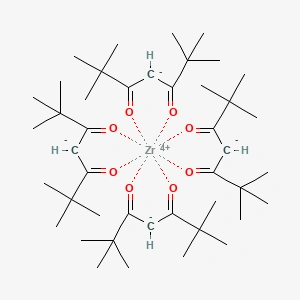
ZrTMHD4 18865 74 2 Structure

Zr(TMHD)4

Zr(TMHD)4 is the tetrakis(2,2,6,6-tetramethyl-3,5-heptanedionato) complex of zirconium, a white to off-white crystalline powder of 99% purity. The four bulky β-diketonate ligands shield the metal centre and make the complex volatile and thermally stable enough to be transported in the gas phase, while remaining cleanly decomposable to zirconium oxide. This balance of volatility and stability is

Zr(TMHD)4 Read More »

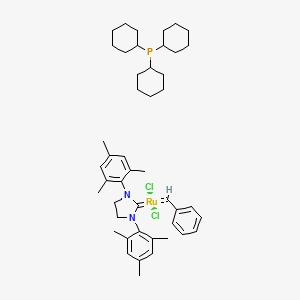
Grubbs Catalyst 2nd Generation 246047 72 3 Structure

Grubbs Catalyst 2nd Generation

Grubbs Catalyst 2nd Generation (CAS: 246047-72-3) is a ruthenium carbene complex bearing an N-heterocyclic carbene ligand, developed for olefin metathesis. Compared with first-generation systems it offers higher activity, better tolerance of functional groups and improved thermal stability, and it is handled in air as a solid with reasonable convenience. It is used for ring-closing, cross

Grubbs Catalyst 2nd Generation Read More »

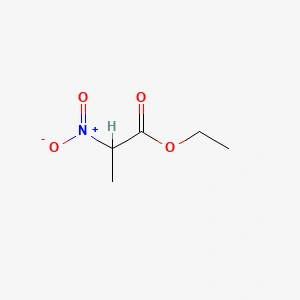
Ethyl2 Nitropropionate 2531 80 8 Structure

Ethyl 2-Nitropropionate

Ethyl 2-nitropropionate is the ethyl ester of 2-nitropropionic acid, supplied as a colourless to pale yellow clear liquid at 98% purity. The molecule combines an acidic α-hydrogen with a strong electron-withdrawing nitro group, giving it high reactivity in Michael additions, alkylations and condensations, where the nitro group can later be reduced, displaced or converted into

Ethyl 2-Nitropropionate Read More »

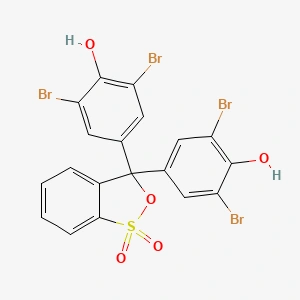
Bromophenol Blue 115 39 9 Structure

Bromophenol Blue

Bromophenol Blue (CAS: 115-39-9) is a sulfonphthalein dye widely used as a pH indicator and tracking dye in laboratories. It changes from yellow at about pH 3.0 to blue-violet at about pH 4.6. Because it is stable, strongly coloured and easy to dissolve in dilute alkali or ethanol, it is a routine choice for titration,

Bromophenol Blue Read More »

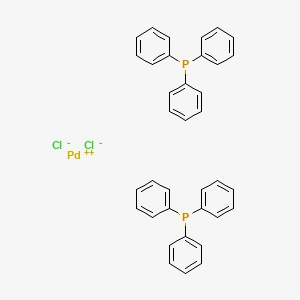
BistriphenylphosphinepalladiumII Dichloride 13965 03 2 Structure

Bis(triphenylphosphine)palladium(II) Dichloride

Bis(triphenylphosphine)palladium(II) Dichloride (CAS: 13965-03-2) is an air-stable palladium(II) phosphine complex used as a homogeneous catalyst precursor in modern cross-coupling chemistry. It is easy to handle compared with many palladium(0) sources and is reduced in situ to the active catalytic species, which makes it a practical choice for both laboratory and production-scale work. The complex is

Bis(triphenylphosphine)palladium(II) Dichloride Read More »

IridiumIVIodide 7790 45 6 Structure

Iridium(IV) Iodide

Iridium(IV) iodide is an inorganic iridium salt with the formula IrI4, supplied as a black crystalline powder at 99% purity. It is a refractory, air- and moisture-sensitive halide that decomposes on heating rather than melting cleanly, and it is handled as a precursor rather than a finished functional material. In the laboratory it serves as

Iridium(IV) Iodide Read More »

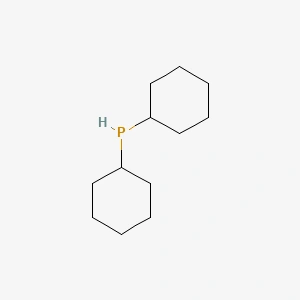
Dicyclohexylphosphine 829 84 5 Structure

Dicyclohexylphosphine

Dicyclohexylphosphine is a secondary organophosphine carrying two cyclohexyl substituents and one P-H bond, supplied as a colourless to pale yellow clear liquid at 98% purity. The bulky, electron-rich cyclohexyl groups make it a strong σ-donor ligand, and the reactive P-H bond allows it to be converted into phosphine oxides, sulfides, phosphonium salts and metal-phosphido complexes.

Dicyclohexylphosphine Read More »

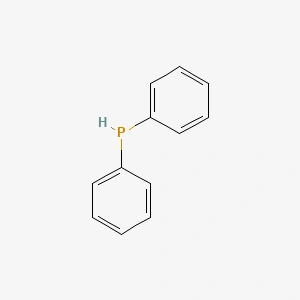
Diphenylphosphine 829 85 6 Structure

Diphenylphosphine

Diphenylphosphine is a secondary aromatic phosphine with two phenyl groups and one P-H bond, supplied as a colourless to pale yellow clear liquid at 98% purity. It is a versatile organophosphorus building block: the labile hydrogen can be replaced by metals, alkyl groups or a second phosphorus centre, while the two phenyl rings provide σ-donor/π-acceptor

Diphenylphosphine Read More »

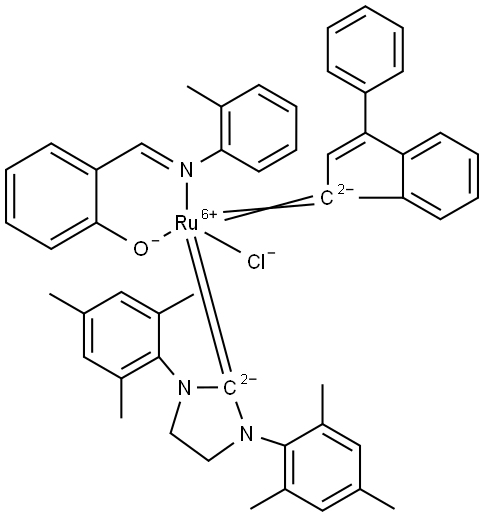
Grubbs Catalyst M350 934538 12 2 Structure

Grubbs Catalyst M350

Grubbs Catalyst M350 is a ruthenium-based olefin metathesis catalyst bearing an N-heterocyclic carbene, a chelating salicylaldimine ligand and an indenylidene group. The combination produces a thermally robust precatalyst that initiates readily while tolerating a broad range of functional groups.

Grubbs Catalyst M350 Read More »

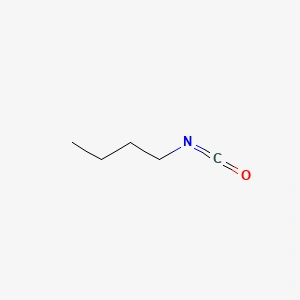
N Butyl Isocyanate 111 36 4 Structure

n-Butyl Isocyanate

n-Butyl Isocyanate is a short-chain aliphatic isocyanate used as a reactive intermediate in polyurethane and fine chemical synthesis. Its isocyanate group reacts readily with alcohols, amines, and other active-hydrogen compounds to form urethanes, ureas, and related derivatives. The product is mainly used in coatings, adhesives, pharmaceutical intermediates, and specialty chemical manufacturing.

n-Butyl Isocyanate Read More »

REQUEST A QUOTE

Product Inquiry — Popup Form