English | 中文 | Español

Chemical Products

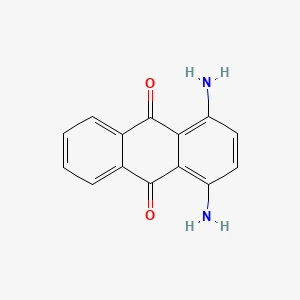
14 Diaminoanthraquinone 128 95 0 Structure

1,4-Diaminoanthraquinone

1,4-Diaminoanthraquinone (CAS: 128-95-0) is an anthraquinone dye also known as Disperse Violet 1. It gives bright violet shades with good lightfastness. It is a dye in its own right and an intermediate for blue and green anthraquinone dyes made by arylation, alkylation or sulfonation. It is supplied as a violet to dark purple powder that

1,4-Diaminoanthraquinone Read More »

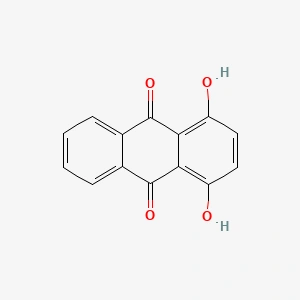
Quinizarin 81 64 1 Structure

Quinizarin

Quinizarin (CAS: 81-64-1), or 1,4-dihydroxyanthraquinone, is an orange-red anthraquinone compound used as a dye intermediate and analytical reagent. It is the starting point for many anthraquinone dyes including 1,4-diaminoanthraquinones and arylamino derivatives, and it forms coloured complexes with metal ions such as boron and aluminium. It is also used for colouring plastics, oils and fuels

Quinizarin Read More »

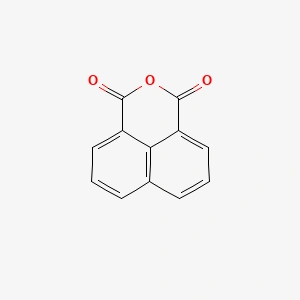
18 Naphthalic Anhydride 81 84 5 Structure

1,8-Naphthalic Anhydride

1,8-Naphthalic Anhydride (CAS: 81-84-5) is a cyclic aromatic anhydride that is a key intermediate for fluorescent dyes, optical brighteners and herbicide safeners. Its reactive anhydride ring condenses easily with amines to form naphthalimides, which are strongly fluorescent and highly stable. Typical buyers need low acenaphthene and acid impurities to maintain colour and fluorescence quality. It

1,8-Naphthalic Anhydride Read More »

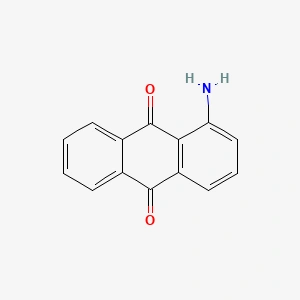
1 Aminoanthraquinone 82 45 1 Structure

1-Aminoanthraquinone

1-Aminoanthraquinone (CAS: 82-45-1) is a red anthraquinone amine and a main intermediate for vat, disperse and reactive dyes. The amino group in the alpha position lets it be brominated, sulfonated or acylated into many valuable colorants. It is supplied as a red to brown powder with good thermal stability and is also used directly as

1-Aminoanthraquinone Read More »
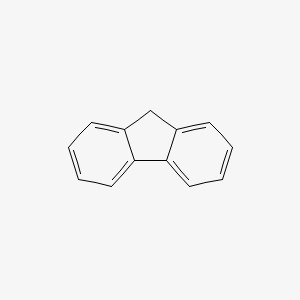
Fluorene 86 73 7 Structure

Fluorene

Fluorene (CAS: 86-73-7) is a tricyclic aromatic hydrocarbon from coal tar, supplied as white crystalline flakes with a faint violet fluorescence. The reactive methylene bridge at the 9-position allows easy substitution, making it a valuable building block for resins, pharmaceuticals and optoelectronic materials. It is used to prepare fluorenone, bisphenol fluorene and polyfluorene-type materials. It

Fluorene Read More »

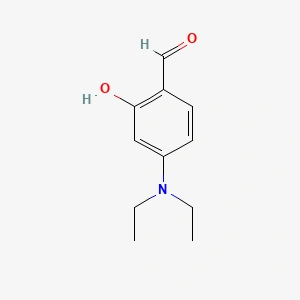
4 Diethylaminosalicylaldehyde 17754 90 4 Structure

4-(Diethylamino)salicylaldehyde

4-(Diethylamino)salicylaldehyde is a substituted benzaldehyde carrying a hydroxyl group at the 2-position and a diethylamino group at the 4-position, supplied as a yellow to orange crystalline powder at 98% purity. This arrangement of donor and acceptor groups on one benzene ring creates a push-pull chromophore, so the compound is strongly coloured, strongly fluorescent after derivatisation,

4-(Diethylamino)salicylaldehyde Read More »

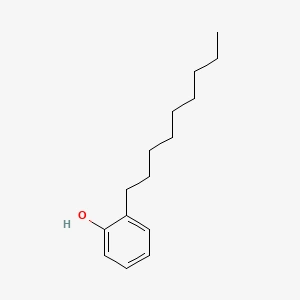
Nonylphenol 25154 52 3 Structure

Nonylphenol

Nonylphenol (CAS: 25154-52-3) is a mixture of nonyl-substituted phenol isomers, normally branched, supplied as a pale yellow viscous liquid. It is the usual starting material for nonylphenol ethoxylates, phenolic resins and lubricant additives. Because of environmental restrictions in some regions, buyers should confirm local regulatory status before purchase. It should be stored closed, away from

Nonylphenol Read More »

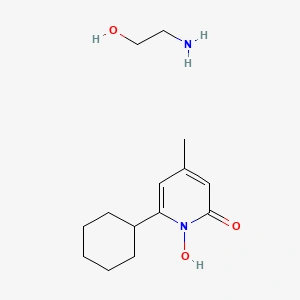
CiclopiroxOlamine 41621 49 2 Structure

Ciclopirox Olamine

Ciclopirox olamine is the ethanolamine salt of ciclopirox, a hydroxypyridinone antifungal, supplied as a white to off-white crystalline powder at 99% purity. The salt form greatly improves water solubility compared with the free acid, so the active can be formulated into creams, lotions, gels and shampoos, while the hydroxypyridinone ring chelates polyvalent cations such as

Ciclopirox Olamine Read More »

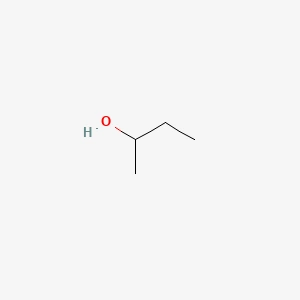
2 Butanol 78 92 2 Structure

2-Butanol

2-Butanol (CAS: 78-92-2) is a secondary four-carbon alcohol supplied as a colorless liquid with a characteristic odor. It is miscible with many organic solvents and moderately soluble in water. It is widely used as an industrial solvent, as a raw material for methyl ethyl ketone (MEK) and as an intermediate for esters and plasticisers. Buyers

2-Butanol Read More »

Solvent Violet 13 81 48 1 Structure

Solvent Violet 13

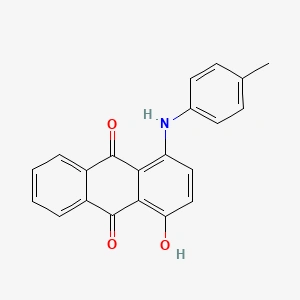
Solvent Violet 13 (CAS: 81-48-1) is an anthraquinone dye that dissolves in organic solvents and plastics, giving a clean bluish-violet shade with excellent lightfastness and heat stability. It is widely used to colour plastics, synthetic fibres, waxes, oils, inks and cosmetics as the colorant also known as D&C Violet 2. Its solubility in non-polar media

Solvent Violet 13 Read More »

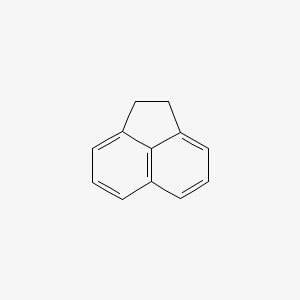
Acenaphthene 83 32 9 Structure

Acenaphthene

Acenaphthene (CAS: 83-32-9) is a polycyclic aromatic hydrocarbon in which an ethylene bridge links the 1 and 8 positions of naphthalene. It is supplied as white to pale yellow crystals. It is isolated from coal tar and is a raw material for dyes, pigments, plastics and agrochemicals. Buyers specify high purity and low colour because

Acenaphthene Read More »

N Benzyl N Ethyl M Toluidine 119 94 8 Structure

N-Benzyl-N-Ethyl-m-Toluidine

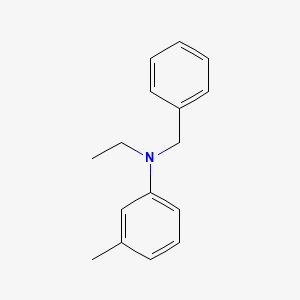
N-Benzyl-N-ethyl-m-toluidine is a tertiary aromatic amine with a benzyl group and an ethyl group on the nitrogen, supplied as a pale yellow to brown clear liquid at 98% purity. The molecule is fully alkylated, so it carries no reactive N-H bond and behaves as an electron-rich but chemically stable amine that dissolves readily in aromatic

N-Benzyl-N-Ethyl-m-Toluidine Read More »

PTCDA 128 69 8 Structure

PTCDA

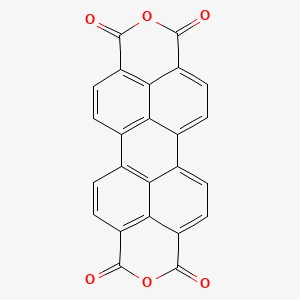
PTCDA (CAS: 128-69-8), perylene-3,4,9,10-tetracarboxylic dianhydride, is a planar aromatic dianhydride that serves as the parent for perylene pigments and organic electronic materials. It forms highly ordered thin films, strong light absorption and good electron-transport behaviour, and it is very stable to heat and light. It is therefore used for perylene diimide dyes and in organic

PTCDA Read More »

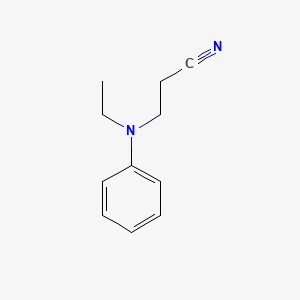
N 2 Cyanoethyl N Ethylaniline 148 87 8 Structure

N-(2-Cyanoethyl)-N-Ethylaniline

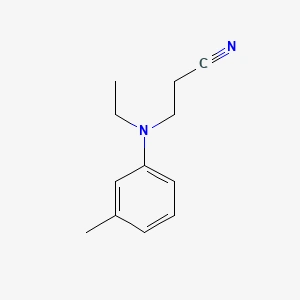
N-(2-Cyanoethyl)-N-ethylaniline is a tertiary aromatic amine with an ethyl group and a propionitrile chain attached to the nitrogen, supplied as a colourless to yellow clear liquid at 98% purity. The propionitrile arm is the reactive feature: under acid or base conditions it cyclises or hydrolyses, converting the simple aniline into fused heterocycles or carboxylic acid

N-(2-Cyanoethyl)-N-Ethylaniline Read More »

REQUEST A QUOTE

Product Inquiry — Popup Form